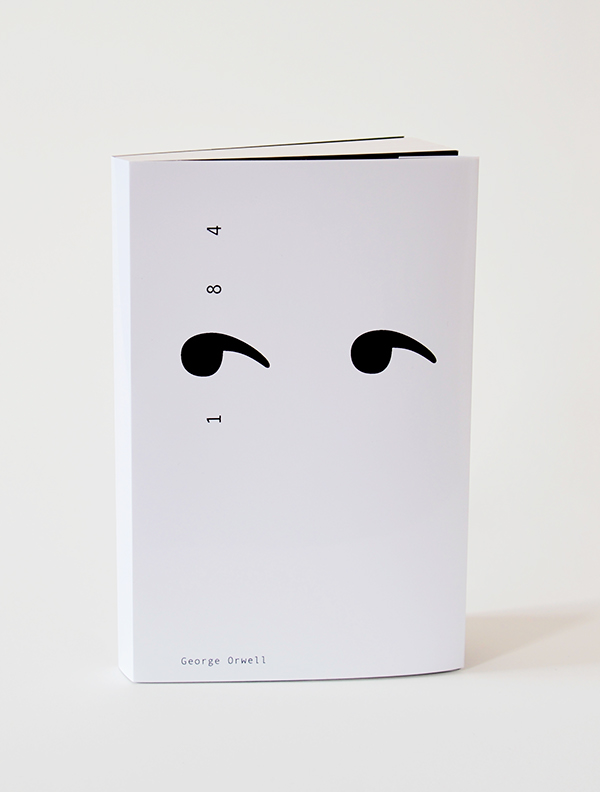
Assignment Three: My Little Book of…

The brief: Create two books explaining and exploring the typographic and layout principles you have researched in this section.

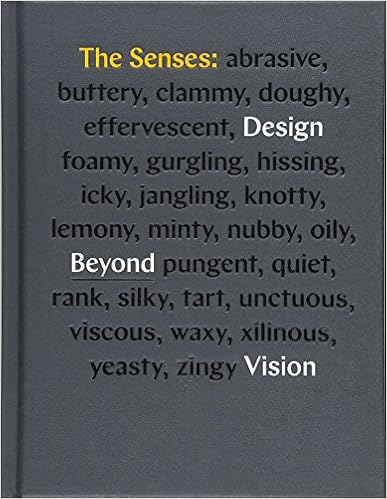
Book 1: My Little Book of…Good Typography
Using the reference material that you’ve gathered throughout the exercises and research tasks in Part Three, design a book which explores traditional ‘good practice’ in typography. What is readability and, as a designer, how can you aid it? Visually explain the typographic principles that we’ve touched on in Part Three, such as type size, leading and line length. For example, you could demonstrate kerning by creating a page which looks at letter combinations applying this principle. Equally, explore good layouts and use of grids to help support and frame your typography. This is an opportunity to develop carefully considered
design layouts that feel easy and engaging to read and look at. Be creative in how you do this, developing a range of options and possibilities. Show off your good typography skills as well as talking about what makes good typography in your text. To support this, find quotes and type rules by other typographers and designers – perhaps revisit your research into book designers from part two. Find examples of good typography within book design you can present and talk about. Your booklet should be a celebration of good typography, whatever you think that is.

Book 2: My Little Book of…Bad Typography
The rules surrounding what constitutes ‘good’ typography are entrenched in tradition and convention, as you demonstrated in Book 1. Having looked at ‘the rules’ surrounding readability and legibility now is your opportunity to break them! Be inventive and experimental in how you explore what might constitute ‘bad’ typography. For example, negative leading, too-long line length and ‘inappropriate’ application of typographic principles may produce visually jarring and uncomfortable results. What does ‘bad typography’ mean to you and how might it manifest itself? Express your ideas in a visually imaginative way within your second book. This is an opportunity to be playful and push your design layouts, typography and ideas to the limits – celebrate bad typography through
your designs and content. Again, find quotations you can work with or examples of bad typography to draw on.

Your books should each take the form of a simple eight-page booklet – folded, stapled or stitched. Design the cover and contents for each. When creating your content for both books, be aware of your audience, and how you might want them to engage with your content.
While both these books are about typography, make sure you also include images within the text. These could be your own illustrations, photographs, or stand-alone typography pieces that accompany your text.
Use a flatplan to organise your content and indicate where important text and images occur, on a recto (right-hand) or verso (left-hand) page, or as a double-page spread. Suggest images by a crossed box, as in the example for ‘front cover’ in the diagram on the previous page. These crossed rectangles indicate image boxes in desktop publishing (DTP) software and are used in drafts and sketches to signify image material. There is no need to go into detailed drawing regarding text or image material at this stage. Text can be indicated by a series of thick horizontal lines, with main headings sketched in. Use the flatplan to familiarise yourself with the structure of a booklet. Note the blank pages and how they are organised to complement the preceding or following page. Note the extent (number of pages) in the book and whether it has been printed in signatures or sections.

As with previous assignments, see this as an opportunity to undertake a creative project that is more circular in nature than linear. Visualise initial ideas, assess them and return to your starting point to develop new starting points. Be experimental with your typography and take creative risks along the way. Focus on how you can visually document your creative journey as well as your reflections on what you are producing.
Your notes should cover why you decided to portray what you did, what you included and what you omitted. Reflect on how do you feel about the two completed books. For example, are there comparisons you can make between them, have any interesting design issues emerged through the process of making them?

What?

Primary Research

Typography Rules

I wanted to create a book that would be like a go to book for a little inspiration and advice. Something that could be carried around in your pocket and used for quick reference. So, using the layout of an 8 page booklet this would give me a front cover, a back cover and 3 spreads in between. This would mean that I could use 3 typographic rules for the interior of the book which could be elaborated upon within each spread. So I came up with a list of rules to adhere to when designing anything typographical.

  • Contrast is King
  • Skip a weight
  • Double your point size
  • Too many typefaces
  • Kerning; leading; tracking
  • Using the grid
  • Breaking the grid
  • Widows and orphans
  • Alignment

I was not sure that I would use all of these rules as they may not all fit or work in my design.

Quotes

Which quotes to use? There are so many out there but which are appropriate to this particular assignment. I decided that I would stick to the classics of Müller-Brockmann and Vignelli as these were the ‘fathers’ of modern typography and layout. However, I would have to find the right ones.

Secondary Research

Dimensions

As I have mentioned above, I wanted these books to be pocket reference books that could be easily carried around and referred to quickly.

Looking back at the research into book sizing in the last assignment I thought that even B5 was too large to slip into a pocket easily.

Source: Imprintdigital.com

So I decided that the books would use the width dimension of a B5 book and this would be replicated for the height giving a square book with the dimensions of 176mm x 176mm. Would this still be too big to fit in a pocket? I thought it was still a bit too big, so I reduced the size to 129mm square.

Papers

To give these books a more robust format I thought that they would need to be at least 250gsm thick stock and given some sort of coating to protect the books giving them a better longevity. Using the sample book from Solopress I thought that maybe a gloss or silk finish would help protect the books. I needed to have a look at some other booklets/leaflets to see other examples.

Initial ideas

So I scribbled down some initial ideas in my sketchbook and some of the type I thought I might use as well as font suggestions.

I think my initial thoughts were to keep it simple and let the illustrative elements draw the reader in and read the accompanying description. My idea was that there would be cover imagery and imagery on the verso pages of the books, type would be on the recto pages and the back cover.

I started thinking about the imagery and how I could use the ‘rules’ as images for the different pages. So I picked the first one ‘Contrast is King’ and did some rough sketches to see if anything jumped out. I was going to use the results of this to set the format for the rest of the book.

I liked the imagery of the crown combined with the type and decided to develop this idea digitally. Overprint had come up in my sketching and this was also a possibility as a lot of info needed to be presented in a small area in an eye-catching bold way.

I initially started with looking for a colour scheme for my first book. I used coolers.co to find a suitable palette by exploring their ‘trending palettes’. As the key word in this section was contrast I wanted a colour scheme with plenty of it. I settled on an orange/blue based palette that I tweaked slightly that I could pick my colours from. I also added black to the palette just-in-case.

I particularly liked the off-white colour that I thought would be good for the page colour and I wasn’t sure whether I’d use all of the other colours.

So I started in Illustrator with the first quote to try and create a style I liked which would then give me a starting point for the rest of the quotations and a style for my books. As these were typography books I needed to find some suitable typefaces to use and I had seen some Instagram posts using a bold sans-serif typeface which were very eye-catching. So I used Identifont to find out what the typeface was and found it to be Champion Gothic. As the quote suggests, I needed some contrast for this and used the site Typewolf to find a suitable pairing of a serif typeface which gave me Chronicle Text. However, these were both premium fonts which I wasn’t willing to pay for. Typewolf also gives you free Adobe alternatives to the premium fonts and the corresponding free font for Champion Gothic was Americane. For the serif typeface I used Stilson which was a good pairing and gave good contrast in it’s italic form. Adobe then went and discontinued Stilson and I had to search for something similar, which took a while! I eventually found Kepler which was the nearest match I could find to my original choice.

As well as the type I wanted to use some form of imagery/icon to represent each quote and decided for the first quote it would either be a crown or a chess piece. I decided to go with the crown as I felt this was a stronger image that was easier to interpret.

I set about designing the first page and used the off-white colour as the base and played around with the quote using different weights of type to give more contrast and reversed out the second half of the quote using an italicised version of the serif typeface. I used an icon of a crown which I layered over the text and changed the blend mode to give an overprint effect with the sans-serif type in the deep blue colour and the crown in the contrasting orange.

I was very happy with the resulting image and could use this style for the rest of my book. I was still unsure as to whether I would use more of the colour palette or just use the 3 colours I’d used in the first design.

The next 2 designs came together quite easily now that I had a template. For ‘Skip a weight’ I chose to use the icon of a weight, which I tried different shapes and the kettle-bell shape was the most visually interesting. I used only the serif typeface for this one as it was just about the differing weights of type and in this case I used the light version and the black version to give maximum contrast.

For the ‘double your point size’ image I used a single typeface in different sizes doubling each time again and used a large multiplication sign as the image.

So these were my images for my 3 spreads in the book but I still needed a cover image. I liked the contrasting type in the ‘Contrast in King’ and decided to use a similar style for the type on the cover with the word ‘Good’ in the bold sans-serif typeface overlaid with the rest of the title in the italic serif typeface apart from the word ‘Little’ which I ironically put in the bold sans-serif typeface.

I was very happy with the way these had turned out and felt that I had found a really good solution to the brief and the imagery for the next book would follow suit.

I was wrong!!!

Even with the prompts for some typography rules designing imagery for bad typography is harder than I thought. Deliberately trying to design bad typography goes against every fibre of my being!

I started with the prompt that I thought would be the most straight forward: Too many typefaces. Using the format of the first book for my designs I replaced the word ‘too’ with the number 2 and this was my dominant element. I used the same typefaces as before, to indicate its relationship with the first book, and then inserted a couple of letters in a different typeface to break up the cohesiveness of the design.

Initially I was going to give this book a brighter colour scheme of magenta and green, but following feedback from peers I dulled it down to give is a more uncomfortable and drab look.

For the cover of this book it had to be Comic Sans and Papyrus as the fonts as these are generally used as examples of bad type.

Source: Youtube

So I replicated the cover of the first book using these fonts which again indicated a relationship between the 2 books.

The next images proved a little more problematic. I couldn’t seem to get the look right for the prompts to do with spacing and using the grid. It then occurred to me that spacing was all about gaps, which them led me to the phrase ‘mind the gap’. I tried making it look like the London Underground signage but it didn’t work with the theme of the books. So then I just used the phrase and tightened the tracking and leading right up and used an outline version of the sans-serif type which was blended between the 2 colours used on the previous pages.

The grid page stumped me. I couldn’t get it to fit with the rest of the images.

I went back to the drawing board and played around with the grid and used it from a different perspective and overlaid the type in bold.

This was more like it and was more in keeping with the rest of the book.

Once I had the imagery sorted I moved into InDesign to produce the whole book layouts. I layed out the 8 pages and added the imagery to the covers and the verso pages.

I had jotted down some some ideas for the type elements in the above sketchbook pages. As before I started with the ‘Contrast is King’ spread and layed out the type using a 7 column grid with a wide margin as these books were meant to be held open. I also repeated the crown element from the image on the opposite page to add colour and interest.

This was the way to go for the rest of the spreads. I used the same formula for each of the type pages using an element from the image on the opposite page.

I now needed to sort out the back covers of each book. For these I wanted to use a classic quote and decided to go for Massimo Vignelli, the classic Italian graphic designer, who I admire greatly. I picked 2 of his most famous quotes that I felt represented good and bad typography. I placed these on the back covers and added a drop-cap and a large letter M representing the designer.

I also used the serif typeface for the quotes as it seemed more appropriate to do so and it was easier to read than the sans-serif version.

I then mocked up the books to show them as they should be.

I envisaged these books to be printed on 250gsm satin paper with the cover being thicker at 300gsm with a gloss finish to help protect the books as well as giving them more visual appeal.

Reflection

This assignment was really enjoyable and I think it shows in the end result. These designs were very well received by my peers and I got some very positive feedback from other students who had also completed this assignment. Personally I was surprised how tough it was to design something around ‘bad’ typography as everything I had learnt about type was telling me “no!”, however I think that they are interesting from a typography point of view.

I think that for this assignment I had a really strong idea from the start as to what I wanted to produce and I think I succeeded in visualizing my idea and designing an interesting piece of typography that could be useful as reference for designers new and old.

Experimental typography

Below is an extract from Jules Verne’s 20,000 Leagues Under the Sea.Using a single typeface of your choice, lay out the text in as inventive a way as possible. Experiment with the letters and words, using the typographic principles you researched in earlier exercises to significantly alter the arrangement of the text, its rhythm and readability.

Think about design group Tomato’s definition of typography – ‘Sound as form’ – and how this concept might apply to your own work. Use the content of the text to inspire visual ideas. How might you experiment with the type to communicate something of the essence of the descriptive content? Think about how the designers you researched in the previous section, e.g. David Carson and El Lissitsky, would approach the text – or artists like Marinetti and Schwitters.

It is important that you play with the text, with individual letters and words. How experimental can you be in making expressive typographic designs? Can you reveal something of the character and nature of the letterform by experimenting with scale and orientation, so a simple unassuming letter becomes a monumental, almost sculptural form?

Think about the sound of the words you are working with, how can your typographic decisions help to communicate these?

As a book designer, you might be more drawn to analog or digital ways of working. Whatever your preference, try to mix and match both approaches. Your work on paper might become a starting point for digital experimentation with this text, or print out your initial ideas, so that you can experiment with what happens when you start to cut, collage or physically alter your text in some way. This physical work can then be scanned to kick start a new digital stage

Read the text through once before starting to manipulate the type. Make several designed versions of this passage, or parts of it, spanning several pages if need be. Feel free to focus on certain aspects of the text, or use the whole text within your designs. Use your learning log to reflect your creative decision making as well as sharing the various stages of your process.

20,000 Leagues Under the Sea, Jules Verne

Chapter 1, A Shifting Reef

The year 1866 was signalised by a remarkable incident, a mysterious and puzzling phenomenon, which doubtless no one has yet forgotten. Not to mention rumours which agitated the maritime population and excited the public mind, even in the interior of continents, seafaring men were particularly excited. Merchants, common sailors, captains of
vessels, skippers, both of Europe and America, naval officers of all countries, and the Governments of several States on the two continents, were deeply interested in the matter.
For some time past vessels had been met by “an enormous thing,” a long object, spindle-shaped, occasionally phosphorescent, and infinitely larger and more rapid in its movements than a whale. The facts relating to this apparition (entered in various log-books) agreed in most respects as to the shape of the object or creature in question, the untiring rapidity of its movements, its surprising power of locomotion, and the peculiar life with which it seemed endowed. If it was a whale, it surpassed in size all those hitherto classified in science.

Design

As I’ve said in previous parts of this blog, I’m a fan of experimental typography. I follow several typographers on social media and I am intrigued by their processes and decision making and I hope to at least use some of their ethos in this exercise.

I started this exercise by refreshing myself with the novel by reading the synopsis of the book as I only had a vague memory of what the story entailed and also the initial passage given in the brief.

From this research I made a list of key elements from the novel.

  • Submarine(Nautilus)
  • Sea Monster(Giant Squid)
  • Harpoon
  • The Sea
  • Reports of sailors
  • Narwhal
  • Nemo?
  • Mysterious
  • Enormous
  • 1866
  • Speed
  • Distance – 20000 leagues

These words were my starting point. I also wanted to use some of the things I had learnt as part of this course e.g. The Golden Section.

I started collating some imagery which appealed to me and felt that they were a fit for what this exercise called for.

Source: Unknown
Source: Pinterest
Source: Typographicposters.com
contrast_by_GunkvM                                                                                                                                                                                 More
Source: shelbywilliams18.wordpress.com
This is the place where I place the best pixels I found during my daily browsing on the internetz. My name is Patrick Loonstra, and I am a graphic designer.
Source: acffca.tumblr.com
once-more-to-the-lake-sm
Source: maxboam.wordpress.com

These images gave me some inspiration for my subsequent designs.

Design 1

My first design I based on the Golden Ratio. I first created a series of circles using the Golden Ratio proportions.

I then used these to form curved lines to represent the tentacles of the sea monster from the story and used them as paths for the type from the passage in the brief. I highlighted parts of the text which I felt were important with a change in scale or weight to give some contrast to the composition as only one font(Bodoni).

Design 2

For this design I again used the squid as the central theme and didn’t really think when I used an image of a giant squid and wrapped the type around it, as this didn’t really interpret the brief correctly as it isn’t purely type. However, with this design I wanted to focus on the passage of type as a report of the creature sightings. This is why the type was given the look of a typewritten report with a bit of a sinister look with the use of the font Chandler42. Again I highlighted important parts of the type either by reversing it put of a coloured block or changing the scale and weight.

Design 3

For this design I wanted to focus on the distance in the title of the book and the fact that it is so vast, 20,000 leagues = 60,000 miles = 2.2 times around the world. So I added the title to the page as large as I could in Rockwell Bold. I then laid a grid over the top of 16 columns and laid the type in either 1 or 2 column blocks reversed out of white boxes. I liked the design of the page but didn’t see any obvious connection to the story.

Design 4

By this time I had realised that the feel of the passage lent itself to classic serif typefaces and had landed on Baskerville, which seemed to suit the extract in the brief. I returned to the linear type style of the first design for this one, but this time the lines of type were used to represent the sea. I added some non-objective lines over the type to accentuate the movement of the water.

Design 5

The use of type to represent the sea seemed to working and this design continued on that theme. This time I warped the passage using ‘warp with mesh’ and gave it an undulating appearance to represent the water and gave it some perspective and a blur to make it feel like you are on the water and give it some depth(a bit ‘Star Wars titles’ I know). I added a portion of the title into the background as I felt that there was too much whitespace.

Design 6

I liked the results from the last version and wanted to use it again in a different way. This time I placed the passage of type in the centre of the page and added a drop-cap. I created a copy and reversed it. This was then warped and given a gradient to give the impression of a reflection in the water.

This design was elegant and yet different and I could easily see this in the pages of the novel. I think this is my favourite of the 6. Whether it is experimental enough I’m not sure?

Reflection

I’ve enjoyed this exercise and I think this shows. I kept the designs black and white so that any colour wouldn’t detract from the typography. It has given me more of an insight in experimental typography and its uses and how it can be used in conjunction with an existing piece of type to help impart the feelings of that piece of writing and conjure-up images without actually reading.

Double-page spread

This two part exercise aims to understand the relationship between typography, the grid, and the page in more depth by analysing existing layouts and creatively developing alternative ones. Both of these activities will feed into assignment three.

Understanding layouts

Research into book layouts that you find interesting. These could be art or design books, or others that have more complex layouts that balance images, typography and other content across multiple columns. Trace the grid structure of your chosen double-page spread using tracing paper and a sharp pencil. Measure the margins, column width and depth, plus spaces between the columns. Transcribe the tracing onto a clean sheet of paper, drawing on the measurements. Compare your drawings to other double-page spreads within the same publication. Identify the similarities and differences – is there an underlying grid system and how does it adapt to deal with different content?
Now recreate the same double-page spread using DTP software. Use your traced drawing measurements as a guide. There is no need to copy out all the text – you can use ‘dummy’ text or ‘blurb’ such as lorem ipsum. Lorem ipsum is Latin text which has a distribution of letters that make it look like readable English. You can download some from www.lipsum.com and incorporate it into your layout. Similarly, there is no need to recreate the images – indicate images by a 10% shaded area, whether these are cut-out, full-bleed or within a box. Try to match the typeface as closely as possible. It doesn’t need to be exactly the same, but try to retain something of the original – for example, make sure you
use a sans-serif font if the original is sans-serif.

Experimental layouts

“These conditioned patterns of reading, from left to right or top to bottom for example, allow us to approach any form of printed material with some expectation of how we will navigate through it. This, then, is the starting point for the designer, who is able to build upon this familiarity within the layout and format of a project, often utilising the element of surprise or difference to confound the reader or user’s expectations.”
Russ Bestley & Ian Noble, Experimental Layout, 2001. Hove: Rotovision.

Extend the project by thinking about how you might radically change these layouts – what creative decisions around the grid would you make to improve these designs? Develop layout ideas that ignore the grid structure, challenge it, or offer radical alternatives to the existing layouts. Develop a range of ideas through thumbnail drawings and DTP layouts, in a similar way to the first part of the exercise. Use this as an opportunity to take creative risks, and find radically different ways to layout the existing content. This process might challenge any preconceived rules about how a layout should normally work. Reflect on the process in your learning log.

Layouts

The book I have chosen for this exercise is ‘Stop Stealing Sheep & find out how type works’ by Erik Spiekermann and E.M. Ginger.

This is one of my go-to books when it comes to typography and is well-thumbed. An average double-page spread in the book is made up of the right-hand page describing the function of the type with the left-hand page showing an example of it in use.

I set out measuring the spread and trying to work out the grid that had been used.

Once I’d measured the size of the layout I measured to borders and proceeded to measure the columns and gutters. I was getting some random measurements which made me realise that this was an American publication and was laid out in inches. Once I had taken this into account things made more sense.

Trying to measure in millimetres!

I managed to work out that the right-hand page was a 7 column grid where as the left-hand page grid varied depending on the imagery used.

I then jumped into InDesign to try and recreate the layout digitally.

It was fun trying to work this out in InDesign. There were different type sizes and styles; dotted lines; colour blocks; and text wrapping. Once I’d got the basic grid it was fairly straightforward to replicate the layout of the double-page spread.

Experimental

For this part of the exercise I set up another spread in InDesign and added a Golden Section grid.

I then added the elements from the previous layout and tried arranging them in a way that was pleasing to the eye. I took several attempts to find a suitable layout.

I changed the orientation of some of the type and gave the page more whitespace which added to the contrast of typefaces, sizes and colours. I felt this was quite effective but wanted to learn more about more experimental layouts. I have several books on type and grids in my growing collection, and one that looks at different grid styles is Typographic Systems by Kimberly Elam.

It does look at 8 different types of grids and gives examples of them in use.

Axial Grids are where elements are arranged either side of an axis whether that be vertical, horizontal or angled.

Axial grid used on this poster by Siegfried Odermatt. Source: Invaluable.com

Radial grids have elements extending from a single central point like rays.

Radial grid used here by Paula Scher. Source: Pentagram

Dilatational grids use a system of expanding circles to create the lines of the grid. This type of grid is also associated with spirals that can be used to direct the eye to a central point.

Dilatational grid using multiple sets of circles by Bernard Stein. Source: Designculture

Random grids are a complete contradiction as elements are arrange in no particular order and the brain sees patterns in the composition that aren’t there or intentional.

An example of a random grid by David Carson. Source: jcolor.com

The Grid System is the most commonly used grid in printed media and is used to organise and create relationships between elements with vertical and horizontal divisions.

The Grid System used by Josef Müller-Brockmann. Source: Wikimedia Commons

Transitional Grids use layers of shifted banding to organise type. This is a more relaxed system doesn’t stick to the rule of edge alignment when it comes to compositional elements and type.

David Carson using a Transitional Grid system. Source: Pinterest

Modular Grids are where type is contained in regularised non-objective elements such as boxes or circles.

Studio Dumbar have enclosed the type just on the right-hand side in this example of a Modular Grid. Source: Pinterest

Bilateral Grids are the most symmetrical of grid systems as they contain type centred on a single axis.

Katherine McCoy uses the bilateral system to divide a single column of type with a slight offset. Source: CO-LAB

There are many techniques to set out a page layout and depending on how much information you have to convey; the size of the page; legibility; the theme/feel of the piece and its use. You could also combined more than one system but this may impact the coherency of the piece.

Experimenting with a Transitional System

Reflection

I enjoyed this exercise and it was good to get the chance to research different layout systems and see how they work. Typographic Systems by Kimberley Elam is a really good book for understanding grids and how they work with examples and exercises to have a go at. I will explore these more going forward and hopefully be able to utilise more experimental layouts in my work.

The Golden Section

“Though largely forgotten today, methods and rules upon which it is impossible to improve have been developed over centuries. To produce perfect books these rules have to be brought back to life and applied.”
Jan Tschichold, The New Typography, 1928


The Golden Section, or Golden Mean, has been applied by artists and designers over the centuries to create harmonious formats for their work. In his extensive research, Tschichold discovered that many book designs were based on the Golden Section. Based on a mathematical formula, and directly linked to the Fibonacci series, the Golden Section provides a method of creating and dividing space that is a useful working framework for the book designer.


“To form a golden section rectangle from a square, the square is divided in half. The diagonal of the half square is rotated to the horizontal, defining the length of the rectangle.”
Andrew Haslam, Book Design, 2006


The red dotted lines show how a rectangle has been created from a square using the Golden Section principle. It is then divided to form 2 facing pages.

Look into the golden section more generally, by exploring how artists and designers have used these principles, and more specifically in book design, by looking at J. A. van de Graaf’s Canons of Page Design, Jan Tschichold’s grid designs, or other grid systems for organising the page: https://en.wikipedia.org/wiki/Canons_of_page_construction

What is the Golden Section?

The Golden Ratio is a mathematical ratio that’s commonly found in nature. It can be used to create visually-pleasing, organic-looking compositions in many design genres. The Golden Ratio(Section) describes the perfectly symmetrical relationship between two proportions. This can be represented by the ratio 1:1.618 and this relates to the size of the above rectangle. This rectangle can then be divided further into smaller rectangles using the same proportions.

Source: YouTube

The Golden section also relates to the Fibonacci sequence (0, 1, 1, 2, 3, 5, 8, 13, …) in which each number is the sum of the previous 2 numbers.

Source: Creativebloq.com

The Golden Section/Ratio has been attributed to many works of art and architecture.

Source: prototypr.io

The Golden Ratio is inherently pleasing to the human eye and is very useful in art and design. In relation to book design the Golden Ratio is used for page size and layout. Jan Tschichold described his discovery of the use of the ratio as “a method to produce the perfect book”. Tschichold’s Golden Canon’s crowning glory was that it proved that the ideal height for the text block was equal to the page width.

Tschichold’s Golden Cannon. Source: retinart.net

The Fibonacci sequence can also be used to form layout grids for book covers, posters or webpages.

Source: YouTube

Reflection

The Golden Section is something that interests me especially from a typographical point of view. The grids and layouts that can be created are very intricate-looking but usually produce the simplest and most pleasing results. Hopefully I can utilise this in some way as part of this course.

Type samples

Find as many examples of type as you can from a range of sources, including newspapers, magazines, flyers, leaflets, online, and printed ephemera. Broadly classify them into serif and sans-serif groups. Explore your computer to see whether you have any of the typefaces mentioned on the previous page. Find other examples on your computer that relate to these classifications. Print these off and begin to create a collection of type samples.

Identify
Choose five different typefaces from your classification collection and now look for examples of how they can be used for reading in different contexts. For example, which typeface would be appropriate for a magazine, a science book or newspaper? Have you collected a typeface that might be suitable for all these subjects? As a way of testing out which typefaces might be appropriate for a particular job, also consider them as inappropriately as you can – find contexts in which they don’t work, look ugly or feel ‘wrong’ in some way. Do this by experimenting visually with your typeface choices.

Reflect
Consider and reflect on the nature of the type you are collecting. Examine and annotate printouts with your own impressions of the letterforms. Use descriptive words that express something of the form and character of the typeface. Follow the same process for your ‘wrong’ typefaces as well.

Develop
Trace some interesting, unusual and everyday letterforms onto clean paper. This will help you to understand the distribution of weight of line within a particular letterform. Draw over the tracing to enhance the line and fill in the letterform with an even dark grey tone – HB pencil is fine – to recreate the impression of print.

Document and present
The work you produce for this exercise will feed directly into your assignment, so collate your notes, printouts, traced letterforms and samples of type you have gathered. Consider how these could be inventively and visually integrated, and how your ideas could be creatively developed further for your assignment.

Type

I have a lot of fonts and typefaces on my computer. I picked a few to categorise them into the classes mentioned.

I also collect some type examples from around me.

Layouts

I decided to use a Devon Life layout from a previous exercise and substitute the type for 5 different font combinations. The 5 combinations I chose were:

  • IKANSEEYOUALL with Publico
  • Rockwell with Raleway
  • Above and Beyond Script plus the Serif version with Futura
  • Helvetica Now with PT Serif
  • Baskerville with Times
IKANSEEYOUALL makes a great heading font but wouldn’t work for body copy as the bold style of it would make it illegible. It gives a relaxed and playful feel to the article. It also works for the drop-cap. Publico Text is a very clear and readable serif font for the body copy with minimal leading(10pt type with 11pt leading). There is also a Headline version of Publico which has more rounded characters.
Here Rockwell gives a straight to the point, no nonsense headline which gives a more serious impression of the article than the previous version. Using Raleway, a sans serif font, for the body copy gives the article a more modern feel. However, the type needs the tracking increasing to make it easy to read as the eye finds it more difficult to recognise the word-shapes.
For this version I added another font into the mix as I wouldn’t be able use the headline font within the article. As well as a script version, Above and Beyond has a serif version which seemed logical to use for the body copy as it was ‘related’ to the headline. I then used Futura for the subheadings to give them more contrast with the body copy. This gives the article a relaxed and informal feel.
For this version I went with the newest version of one of the world’s best known fonts Helvetica Now. I used this for the headline and drop-cap in its Display weight. The body copy is PT Serif which is easy to read and contrasts the bold, angular headline. This version of the article feels very formal and important.
Baskerville and Times. What more can I say about this combination. It gives an air of class and sophistication and is easy on the eye. The Avenir drop-cap is in direct contrast to these 2 serif fonts and helps to add some sans serif variation to the layout so it doesn’t feel too stuffy.

Tracing

Tracing the fonts gave an insight into the construction of the letters and forms; how elements of the type are repeated across multiple characters; and how line thickness was important, even on the more dodgy-looking typefaces! It took me back to my diploma days in the 90s huddled over the lightbox in the corner of the Graphics Studio. This exercise is nicely timed as I’m currently reading In Progress by Jessica Hische about hand-lettering and the construction of letters and type.

Source: Amazon.com

Reflection

This exercise reinforces how much type can influence the feel of a piece of work and your perception of the contents. I hope to get more involved in designing and using hand-drawn type as I have a keen interest in lettering and typography.

Paper and bookbinding

Further inform your understanding of paper and bookbinding by reading pages 165–180 of Alan Pipes’ chapter ‘On Press’ available as a downloadable resource at
http://www.oca-student.com/

Collect lots of different paper samples, and assemble these into a standalone book, or integrate them into your sketchbook. See this as the start of an ongoing resource that you can add to, and refer back to. Add notes to your paper sample book/sketchbook identifying the paper source, stock, and any reflection on the paper’s qualities. You may want to extend this investigation by exploring how your paper samples can be folded, combined, stitched, printed on, or bound together. Explore your samples’ physical properties by working with them, testing them out, and visually documenting the results of your research.

Prior to lockdown I had begun collecting paper samples from print companies. I have managed to collect a couple of sample books and have more on the way hopefully! They have proved very useful in identifying the types of paper and finishes that can be used in the printing process from the weight and finish of the paper itself to any special finishes added to designs such as kiss cutting, creasing, perforation, die cutting, matt or gloss lamination and spot UV.

Spiral bound sample books of plain white paper from Newton Print in Newton Abbot.
A really nice perfect bound, full-colour sample book featuring different papers, finishes and effects from Solopress in Southend on Sea.
A sample of die cutting effect in the Solopress book
A sample of different paper in the Solopress book.
A sample of spot UV effect in the Solopress book.

I found the Solopress sample book really interesting and it contains a lot of information about the uses of each paper and the possible finishes that could be applied. It is a very tactile, well designed and informative book which I’m sure I will keep referring to in the future.

Becoming more familiar with different types of paper and finishes has given me more of an insight into how papers and finishes are used. I now find myself trying to identify the types of papers used in everyday stuff I come across in my day-to-day life from magazines, books, things that arrive in the post to the printer paper I use. I will continue to add to my collection of samples to widen my understanding of different printing and binding techniques.

Assignment two: Form and function

Assignment two provides a creative opportunity to put into practice what you have learnt so far, by exploring the physicality of the book in relation to its function and working through the design process in relation to a set brief.

Your brief

Design the book format and cover artwork for two different versions of Daniel Defoe’s classic 1719 novel Robinson Crusoe. The publishers, Viking Press, have decided to re-release this title as a new pocket edition for readers on the move that reflects the adventurous nature of the story within a contemporary setting. This paperback version should have a modern visual feel that can compete with new titles in the bookshop. They also want a deluxe edition for armchair readers and classic book collectors that references the historical nature of the story and its associations. Produce book design ideas and cover artwork to reflect the content of the story across both formats and contexts. Be creative and inventive with both the look and format of these books.

As a side project to accompany the re-release of Robinson Crusoe, Viking Press has also asked you to design a new book called Washed ashore: The ultimate guide to surviving on a desert island by Rik Bennett. This is a ‘how-to’ guide that should reflect not only the practical advice it offers but something of the adventure of being a castaway.

The scale, stock and binding of these publications are up to you. The pocket edition needs to celebrate the functionality of the book as a lightweight, transportable object, and to connect to the story’s travel or survival themes in a contemporary way. The deluxe edition can present the content in a larger, finer, more luxurious, considered or expanded way, that perhaps makes reference to the history of the book itself. Your designs need to be seen as part of a series across both versions, so think about how you adapt your designs to fit each format. The shipwreck guide needs to be seen as a separate genre, piggy-backing on the success of Robinson Crusoe. Develop visual ideas that can distinguish the survival guide from your Robinson Crusoe designs, while at the same time making some thematic connection between them.

Your design should include the front, back, spine and flaps of your covers – if you opt for traditional bookbinding. You can also come up with alternative ways of binding, and therefore designing your books if you want to. Generate your own illustrations, photography or artwork for the covers, source copyright-free images, or treat the covers purely typographically. This is an opportunity to be creative with both your design thinking and outcomes, so experiment, and test out a range of visual and physical options.

You may want to extend your project by also designing several sample pages from the inside of the book. When creating sample pages, try to make a link between the cover design and the design of the inside pages.

Present your ideas by mocking up each of the books and their covers, and by presenting the overall spec of your designs (what paper stock you are using, etc.).

Work through the design process, documenting it in your learning log as you go. Use rough drawings, notes, diagrams, mock-ups of your books, photographs of what you’re working on, and by saving different stages of any digital work to show your process. Talk about your creative process through notes and reflections.

Research and ideas

Read the brief, identifying keywords, and do the same for Defoe’s text. You don’t have to read the whole book, but make yourself broadly familiar with the story and identify key themes, motifs and images. The full text of the novel is available here: http://www.gutenberg.org/ebooks/521

Identify the research you need to undertake. This could include researching existing versions of this cover, others of the same genre, or seeking inspiration elsewhere. The same goes for your survival guide. This brief requires some lateral thinking, so develop unexpected ideas, as well as the obvious. Generate thumbnail sketches to document and explore your creative thinking process. Aim to come up with a range of different ideas from which you can select and test different outcomes.

Present visual outcomes

Develop your initial ideas through making, drawing, collage, photography or whatever other mediums you choose. Be playful and let new ideas emerge through your making process. See this as a project, rather than a linear journey, so you may want to return to earlier stages of the process to develop new lines of visual enquiry or to take creative risks and try new things out. For the deluxe edition of the book, you may want to access the Bridgeman Library to source copyright-free illustrations from previous editions of the book.

Think about how your choice of scale, paper selection, and binding can help support your ideas in visual and tactile ways. If you are unable to source particular materials, then find other ways of visualising or describing your choices.

Layout the jacket using DTP software and incorporating text and image(s). Design a range of versions of the jacket to choose from. Print the jacket designs and make a mock-up of the jacket onto either an existing book or find other ways of mocking up the scale of the books. Photograph both versions of the book jackets as your final outcome to the project brief.

Reflection

Reflect on your outcomes but more so on your creative process – what worked for you, and how might you adapt these approaches for future projects? Just a reminder to think about how well you have done against the assessment criteria and make notes in your learning log.

What am being asked to do?

I began with an analysis of the brief using the template I had developed previously…

Brief Analysis - Robinson Crusoe

This helped me identify where to begin developing my ideas and research.

Primary Research

Defoe was said to have based Robinson Crusoe on the real-life experiences of a Scottish privateer, Alexander Selkirk, on the island of Juan Fernández off the coast of Chile in the Pacific. In 1704 Selkirk asked to be dropped off on the island after a dispute with his ship’s captain. He thought that he would be quickly picked up by any of a number of privateers sailing along the same shipping lane. He was wrong. When finally picked up four years and some months later, wearing little but goatskins, he seemed slightly crazed, had lost some of his ability to speak and showed symptoms of the depression that would stay with him for the rest of his life.

Source: British Library

First published in 1719 it is regarded as the ‘first’ English novel, which by the end of 1719 had 4 separate editions which grew to more than 700 versions and translations by 1900. No book in western literary history has had more. It has spawned more than 20 movies; television shows; plays and pantos; 2 sequels; and has given the English language names and phrases still used today.

The book’s full title is ‘The Life and Strange Surprizing Adventures of Robinson Crusoe, Of York, Mariner: Who lived Eight and Twenty Years, all alone in an un-inhabited Island on the Coast of America, near the Mouth of the Great River of Oroonoque; Having been cast on Shore by Shipwreck, wherein all the Men perished but himself. With An Account how he was at last as strangely deliver’d by Pyrates.’

We do have a copy in our house that dates back to the 1950s according to the handwritten dedication inside to my wife’s aunt. I think it is missing its dust jacket but I managed to source an image of what I think it originally looked like.

img_2973img_2974

22813737908

Source: Abebooks

This book featured the traditional image of Crusoe and Friday that you would conjure up in your mind when thinking of this novel.

This led me to look at other covers of the Defoe classic that stood out to me.

Forgotten Bookmarks: Friday Giveaway: Robinson Crusoe ...Oxford bookworms 2. Robinson crusoe mp3 pack (Tapa blanda)  Robinson Crusoe illustrated on Behance Google Image Result for https://cdn.shopify.com/s/files/1/2444/6393/products/Daniel-Defoe-Robinson-Crusoe_287x432.jpg?v=1568955133Robinson crusoe

These all stood out to me for they are mostly minimal designs which didn’t directly reference the characters in the book. I wanted to stay away from the usual goatskin-clad figure with his doting man-servant and these appealed to me.

Secondary Research

Book sizes

Having to design 3 separate books I initially thought that they would all be different sizes. So I set out researching different book sizes.

Source: ImprintDigital.com

B-format seemed ideal for the pocketbook version as this was the size of the copy I had at home(210 x 135mm) and this felt to me to be the right size for the smaller of the 2 novels. The hardback, collector’s edition needed to be larger and more substantial than the pocketbook so I thought that the size of 279 x 216mm was a nice large size to work with. This was the largest size recommended on ImprintDigital.com for hardbacks as any larger size would be reserved for picturebooks. I was unsure about the size of the third book at this stage but I had a point of reference to work from.

Materials

While researching the above website it did go into how book covers could be finished. There was the options to either clothbound in a 135gsm Wibalin with or without a dust jacket; or a laminated printed paper case. Paperback covers are printed on 240gsm and laminated. Both would also be able to be embossed/debossed, foiled or spot UV. The hardbacks could have head and tail bands, marker ribbons and custom endpapers. I had also thought about giving the hardback a slipcover. What weight and colour of paper would be used inside? 80gsm woven is the standard for fiction book pages however, for special editions, this can be thicker. If images are used inside it would be worth printing them on coated paper and having them inserted into the woven pages of the book. The pages of the paperback would probably be glued into place whereas the hardback would be stitched.

Inspiration

As stated above, I liked the idea of the cover being far from stereotypical with something other than Crusoe and Friday being depicted. I wanted to try and have some sort of underlying meaning behind the cover’s imagery or typography.

For inspiration, I read the synopsis of the book on cliffnotes.com and listened to a BBC Radio 4 podcast Desert Island Myths: Three Centuries of Robinson Crusoe which gave me more insight into both the book itself and the history around it.

I also started adding more imagery to my Book Design Pinterest board.

Screenshot 2020-05-18 at 21.02.38

I also had a look at some of the books I had(cookbooks of course!) that I thought could be used as design ideas and how they were finished.

img_2910

I like the material used to cover this book(Wibalin?) it is very tactile and makes the book feel more luxurious. It also has a marker ribbon.

img_2911

The cover glued in place and the endpapers hide the joins.

img_2912img_2913

These 2 books both come in slipcovers which give them a more high-end feel. I may use this in my final design for the collector’s edition.


Design

Mind Map

After clarifying what was expected of me in this assignment I then moved on to idea generation through the use of mind mapping.

6FE4EE2F-4439-4BAE-9B0B-025BFACB115A

I mind mapped the novel and included ideas from my research which naturally led the development of ideas for the ‘how-to’ book in the series. I highlighted the words that I felt I could work with and would generate the best outcomes. I was particularly interested in the religious aspect of the story and the bleakness of island life, rather than it being anyway near idyllic.

I have made a concerted effort to use a sketchbook/notebook more lately which I find hard as I prefer to work digitally(Old dog new tricks), but I did make some rough initial sketches which were my initial thoughts and notes.

img_3069img_3070

My initial rough sketches/notes gave me 4 possible options to work with:

  • Religion
  • The island
  • Footprints
  • Palms

Religion

This was my initial approach to the cover when I first read the brief. Being a fan of typography my first direction for this was a typographical one. Being a fan of Roy Cranston’s experimental typography and recently discovered Wolfgang Weingart I wanted to try and attempt something in a similar style. I had recently watch a Youtube video featuring Roy Cranston’s work process and wanted to see if I could emulate it.

The main element of the design would be the cross, but not in its traditional form. I wanted to use type to form the cross and try to give it the bleak feel that I had identified in my mind mapping. I had also had the idea of using a photo of my own in the composition as I have relatives that live in the Caribbean who I have visited several times.

IMG_1313
Disgusting I know!!!

I also, somehow wanted to add the infamous footprint from the story in there too. I didn’t want the typical footprint in the sand, I wanted something different, edgier to fit with the design so I used a print of my own foot.

Screenshot 2020-05-19 at 21.00.08

I liked the idea, but the execution didn’t quite work. The overall design wasn’t quite as appealing as I expected and I don’t think it would be attractive enough for mainstream book readers who are the target audience. It is however, something to bare in mind for future reference.

Island

The next idea was for an image of the island itself whether that would be a literal picture or something stylised. I had come across a few images on Pinterest of stylised landscapes and I liked the way that the flat designs worked.

Julian Montague Projects - Books/Covers/Posters/Etc. - Book/Album…#bookdesign #printdesigns #bookstagram #me #illustrator #galery #beautifuldesigns #artdrawing #bookcover #books #design #sketch #designs #magazinedesigns #cover #typographydesign #print #worlddesigners #globaldesigns #visualinspirations #graphicideas #graphics #typographyart #illustration #bacabuku #bukuoriginal #dailyart #drawing #bookworm #book  Design by The Heads of State // Seven Pillars Book Cover - The Heads of StateYearbook of Agriculture 1967. Stunning!

I liked the idea of using the sun as a focal point of the design and had thought about using its reflection in the water as another element for the design in my sketches.

I started by dividing my cover into a 4×4 grid and using the bottom 3 rows as water and the top as the sky. I then added the sun and its reflection. I used a muted colour palette to give it a bit of a retro feel and not be too garish and in-your-face as in the case of the previous design. I then drew the island shape on the horizon and toyed with a reflection. It didn’t need it. Below the island were the title and author on a simple sans-serif font(Avant Garde Gothic Pro) which was understated to fit in with the minimal design. I then overlayed a linen texture to give the book its luxurious feel.

robinsoncrusoe

At this point, I was very happy and continued with the spine and the back of the book.

Screenshot 2020-05-20 at 20.43.30

I’m still trying to work out why the publisher’s mark has disappeared!!

Still convinced that this was the final design I went on to mockup the collector’s edition.

Screenshot 2020-05-01 at 16.39.39Screenshot 2020-05-01 at 16.39.24Screenshot 2020-05-01 at 16.39.06

I was on to a winner here so I moved on to the pocket edition. For this, I intended to do a type-based cover while keeping the theme of the first book. In my sketches, I had toyed with the idea of the letter ‘O’s in Robinson Crusoe withe sun in them. I used this as a starting point for the next cover keeping the sea and sky but removing the island and replacing it with type. The type itself I wanted to give an irregular look to represent the makeshift nature of Crusoe’s life on the island while giving it a contemporary look. I decided to mix upper and lower case of the same one used in the first book.

Screenshot 2020-05-20 at 21.06.42

I even made a design for the endpapers using a repeating circle design.

Screenshot 2020-05-20 at 21.20.10

While I was enjoying this particular design I knew I had 2 other options to explore, so I put this on the back burner for now and return to it later.

Footprints

Following on from the previous exercise, I wanted to try a similar style to the multiple-hats design I had done for The Handmaid’s Tale.

handmaid-[Recovered]

For this one, I wanted to give it a more classical look while giving it a modern approach. So using the same turquoise/blue from the previous design I set about creating a footprint pattern that I imagined would be foil blocked in silver on to the blue cover of the collector’s edition book. As in the above design I highlighted on particular footprint which could be interpreted as Crusoe’s or the cannibal’s footprint featured in the novel.

Screenshot 2020-05-20 at 21.23.27

However, I didn’t feel like this was a strong enough response to the brief and was a little too much like the work of Coralie Bickford-Smith for my liking and the idea was consigned to the bin.

Palms

In the words of ABBA “I had a dream”(age-appropriate reference) that involved the image of a palm leaf disintegrating.

I had recently watched a Photoshop tutorial on how to create an effect featured in the film Avengers Endgame.

Obviously, this had resonated with me and the dream involved a palm disintegrating which was a metaphor for the destruction of paradise by the coming of the Europeans who enforced their rules, religion and way of life on the indigenous population. Deep I know!

So I needed a palm leaf to create the effect and sourced on from freepik.com that fitted with the idea of my design.

crusoenotype

I then went to work trying to replicate the disintegration effect. It took several attempts before I settled on a result I liked.

Untitled-1

This was going to be the basis of the book’s cover. The brief had asked for the book to have a modern feel but appeal to more traditional readers too. I thought that the image would appeal to both audiences but without the right font, it may lose one or both of the target groups. I played around with several fonts and typefaces and eventually settled on Futura as it’s both classic and modern with its clean lines. I also decided to apply Occum’s Razor to the type and remove as much as I could without losing the book’s identity.

Artboard 1

This design had exited me the most and I could envisage it in a bookshop window and that it could be seen clearly from afar by passers-by.

It was at this point I decided to mock it up to get a feel for what it would look like as a hardback edition with the same textured, cloth-bound cover as before.

Screenshot 2020-05-04 at 16.46.29

At this point, I wasn’t sure how I was going to differentiate between to collector’s edition and the pocket one other than size as I thought that the one design would suit both publications. Looking back at my initial research I had toyed with the idea of a slipcover which some more expensive books are sold in. This could be a point of difference that would definitely help to distinguish one from the other.

Screenshot 2020-05-04 at 21.58.01

I found a suitable mockup and set about creating a suitable slipcover for the collector’s edition of the book. Should it be embossed? Should it be foil stamped? Silver? Gold? Then I thought that until you open the book(if you are not familiar with it) you have no idea of the despair and hardship within. So I decided to keep the illusion of paradise on the slipcover by keeping the palm leaf whole and intact and you don’t see its disintegration until you reveal the book inside.

I again wanted to repeat the use of a marker ribbon in this edition.

13-hardcover-book-closeup-Recovered

I then created a pattern for the endpapers using another image from freepik.com which I duplicated to create a layered effect similar to the cover of the Jungle Book by Tatiana Boyko.

However, I wanted to keep my design to shades of green and the overprint style didn’t quite work, so I kept them as solid shapes which worked much better in the context of this design.

endpapers

I had to add my own marker ribbon to this mockup as it didn’t have one! This could also possibly be the lining of the slipcover.

So that was the collector’s edition done, now onto the pocket edition. I thought that this time around the pocket edition would have the same design as the collector’s edition but would be in paperback and in a smaller size(B5). I wouldn’t have any fancy slipcover, ribbon or endpapers, but would have to be quite robust if it was to be read on the move and the materials would need to take this into consideration(I will cover this later).

So here it is with its big brother.

Screenshot 2020-05-26 at 22.01.57

Now on to the tricky one. I have a few how-to books in the house and lots of recipe books(which are a form of how-to books) but have never really considered the genre and its format. I did a lot of internet scouring and there was one really overriding element that appeared in how-to books and that was the use of symbols and icons. These were used to denote sections in books, in step-by-step guides, equipment/tool lists, flat-pack furniture instructions. They were everywhere! So, this was how to approach the trickiest book of the three. I would organise it around symbols. In the mind-mapping stage of my research, I had identified some things that may be needed to survive on a desert island – shelter, fire for cooking and warmth and water. I thought that I could create some symbols for my book cover for these important survival elements. Then it occurred to me that I could tie it in with the other books if I had a palm leaf symbols as well. The idea of having a how-to survive on a desert island book would only really come in handy if you were on a desert island. So this book also needed to be pocket-sized(B5) and it got me thinking of how it would be used. If you had it on the island with you, you could use it for reference and also it could be used as a notebook or journal. This then got me thinking about it being quite utilitarian in nature and would need to be functional over form and design. What sprang to mind were Aaron Draplin’s Field Notes that are meant to be carried around with you all the time to make notes and sketches on the go. These are purely notebooks and are stapled together. The how-to book would be a little more substantial and would need better binding than a couple of staples.

Kraft memo book lineup showing all three paper styles and the mixed 3-pack.

Source: fieldnotesbrand.com

I also liked the Kraft paper covers of these and thought that I could use this for my design which would fit with the utilitarian look I was going for.

So I decided to start with the icons/symbols I wanted for my book. I was going to use a palm leaf to tie the book in with the others; a tent symbol representing shelter; a fire symbol which would be for warmth and cooking; and a water symbol for fresh water.

Screenshot 2020-05-27 at 21.02.29

These were the 4 symbols/icons I came up with. To link with the other books I coloured them in shades of the same green used for the type on the novels.

Screenshot 2020-05-27 at 21.09.40

I then place these on a Kraft paper cover along one edge and added the type in the same font as the previous covers and in one of the greens to match the symbols/icons.

Screenshot 2020-05-27 at 21.12.21

I was happy with the way this was going but it was still missing something. In my research into notebooks and journals, some had an elasticated band around them to hold then closed or open on a specific page, or to be used as a bookmark. I decided to add one to the book. I added this when I mocked-up the third book, which again was a composite of several mockups and took some doing. However, the result was pretty good.

Screenshot 2020-05-06 at 19.40.23

Layout and materials

The layout of the cover, spine and back cover would be relatively similar on both novels.

Screenshot 2020-05-27 at 21.28.28

Hardback

For the hardback copy, the cover will be 2750 micron board wrapped in 135gsm Wibalin with the design printed straight on to it. For the endpapers, a 140gsm Bond paper would be used as it is durable and has a matt finish. The pages would be printed on 120gsm Bond paper and case-bound into the cover with a green page marker ribbon. This would then be presented in a 2750 micron board slipcover with the palm design printed on the outside with a matt finish and the inside lined or printed with the endpaper design.

Paperback(Pocket edition)

The cover of the paperback novel would be 240gsm and given a gloss lamination to give the book some protection against being carried around. The pages would be printed on 80gsm Bond paper to help keep the costs down and would be perfect bound into the cover using an EVA (Ethylene-Vinyl Acetate) glue, again to keep the costs down.

Screenshot 2020-05-28 at 21.48.53

How-to book

This book would be bound using 240mic Kraft paper with the design printed directly on to it. The circular icons/symbols would have spot UV on them to give them a shiny effect. The book would be perfect bound and would comprise of different paper types with instructions and information sections would be printed on 130gsm coated paper with sections of 100gsm Bond paper in between for writing notes or a journal. These could be perforated for removal if needed. The back cover would also have the elasticated band attached inside.

Screenshot 2020-05-11 at 21.46.00

Conclusion

This was a challenging assignment as the idea of adding the choice of materials into the mix gave it another element to consider in my designs.

My initial research of reading some of the book and listening to podcasts added more context to the design process and offered up elements that I wouldn’t have considered if I hadn’t done this.

As before, I know that I need to work in a more analogue way before jumping into digital and I am trying to incorporate more sketchbook work into my idea development to give a broader source of inspiration for my designs.

Overall I’m very happy with the outcome I chose and received great feedback from my peers. The only criticism was in the choice of font and I had to explain that it was to give it a more contemporary feel. Personally I thought that the final design without type could be confused with Paradise Lost, but once the type was added it made sense. Of the 3 books the ho-to guide was the hardest to do without being too cliche. But I liked the idea of giving it a notebook feel that could be carried with you in case you got stranded on a desert island. The mockups were fun and challenging to create as I had to add elements to some which involved a lot of tweaking which I enjoyed.

The final designs were not at all what I set out to create at the start of the assignment but I think they are better for all the extra research and are more refined because of it.

Designing a cover

“A rat in a maze is free to go anywhere, as long as it stays inside the maze.”

Margaret Atwood, The Handmaid’s Tale, 1985

Following on from the discussion of George Orwell’s novel 1984, look at the covers for Margaret Atwood’s equally dystopian novel The Handmaid’s Tale (1985), in which a woman finds herself surviving inside a harsh American fundamentalist society, that sees women’s roles as subservient cooks, matrons, and mothers. Alternatively, you can pick a different book to respond to, but it needs to be one with more than one cover design, so avoid recently published books.

Are there key conceptual motifs being used over and over again within different cover treatments? Can you identify more expressive versions of the covers? Check the date of each version and try to speculate about the historical, political or social context for each one. (Don’t spend long on this but it’s important to realise that creative design doesn’t happen in a vacuum.)

Using one of the main motifs you have identified (such as the uniforms that feature the book), the title of the book, author’s name, and no more than three colours (including black and white) generate as many different layouts of the cover design as you can. Think about how you can dynamically layer, organise, frame, clash, or balance these elements. Work quickly and come up with lots of different visual possibilities.

This is a similar exercise to the Lightbulb Project in Graphic Design 1, which aims to generate quick design possibilities by arranging your typography, motif and colours in as many, and as varied, ways as possible. Examples of students’ responses can be seen here: https://www.pinterest.co.uk/opencollegearts/the-light-bulb-project/

Use thumbnail drawings or DTP layouts to achieve at least ten fundamentally different layouts. This is a warm-up exercise that will help you with your approach to designing a cover for assignment two.

The Handmaid’s Tale

38447. sy475

Source: GoodReads

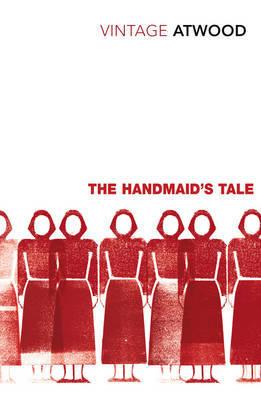
This 1998 cover is quite traditional in its approach to the story depicting a quite an innocuous scene from the book of a couple of handmaids in front of ‘The Wall’ but doesn’t really give you any more of an inkling into the novel’s contents. It is an expressive cover which seems to be aimed at older readers in its use of imagery and serif fonts used. It is printed in full colour which gives the book a more expensive feel and looks but is still wildly different from the Picasso-esque first edition cover from 1985.


TheHandmaidsTale(1stEd).jpg
First edition 1985 Jacket design by Tad Aronowicz. Illustration by Gail Geltner

Source: Wikipedia

1998 saw the Royal Assent of the Human Rights Act which was in complete contradiction to the book in which women have no rights at all in a dystopian society. This was also right in the middle of the ‘girl power’ era which helped with the sales of the novel. The cold war was also coming to an end and the wall holds some symbolism towards this.


The Handmaid's Tale

Source: Waterstones

2010 – This Australian cover is a 2 colour cover which looks like the image has been overprinted and is reminiscent of propaganda posters and has a utilitarian look. All the figures are the same without features which I feel represents the suppression and lack of identity of women in the book. It feels very minimal and bleak which reflects the time with the global financial crisis being at the forefront of everyone’s mind.

The Handmaid's Tale - Margaret Atwood (Jonathan Cape Ltd 1986)

Source: Waterstones

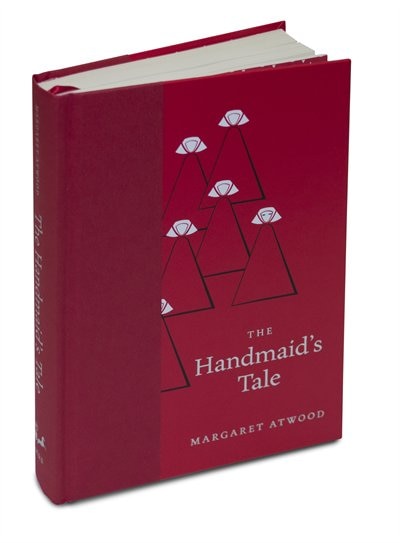
2016 – A more decorative cover with elements of the story interwoven with flowers that include bleeding hearts and lilies that are symbolic of sorrow, unrequited love and death.

 The Handmaid's Tale (Deluxe), Book by Margaret Atwood (Hardcover ...

Source: Indigo

2017 – Another ‘red’ book cover, this time depicting stylised handmaids all identical except one which has facial features showing the rebelliousness of the main character and her unwillingness to conform. 

Source: Penguin

2017 – This cover is based on the TV series and is aimed at new readers who have watched the series. Again red, white and black are used, this time in conjunction with a photographic image.

The Handmaid's Tale: Graphic Novel (Hardback)

Source: Waterstones

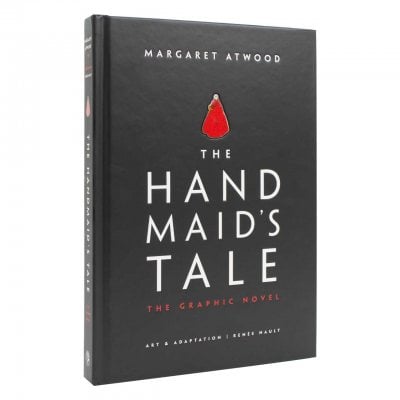
2019 – I have included this one as on this cover the typography takes centre stage and there is minimal imagery. This gives very little away about the novel and has also split the word ‘handmaid’ to make the type work. 

 The Handmaid's Tale (Deluxe Leatherette Edition)

Source: Barnes & Noble

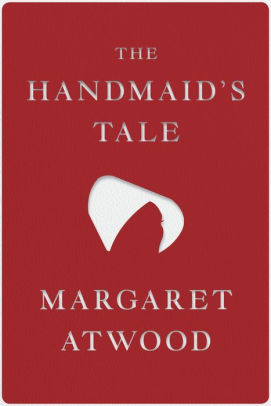
2019 – There were several new covers for this novel following the success of the TV series. This one caught my eye as it reminded me of older-style, pocket novels from the early days of mass-printing with its serif type and muted red colour.

Source: Amazon

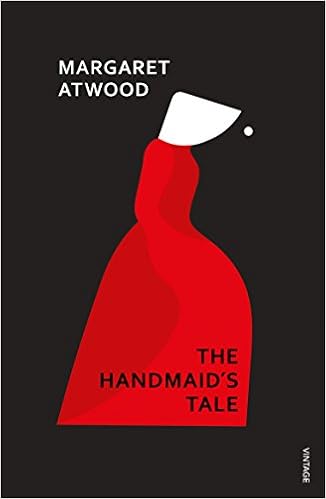
2019 – My wife has a copy of this version which I really like. The simplicity of the imagery reversed out of the black background in vibrant red and white is now synonymous with the novel and is easily recognisable.

Redesigned UK #CoverReveal  The Handmaid's Tale by Margaret Atwood

Source: Penguin

2020 – This new cover for the Penguin Classics range is a lot more illustrative depicting the beauty within the handmaid with the use of the flowers, while still keeping the red and white uniform and the wall in the background. 

The Handmaid's Tale

Source: Penguin

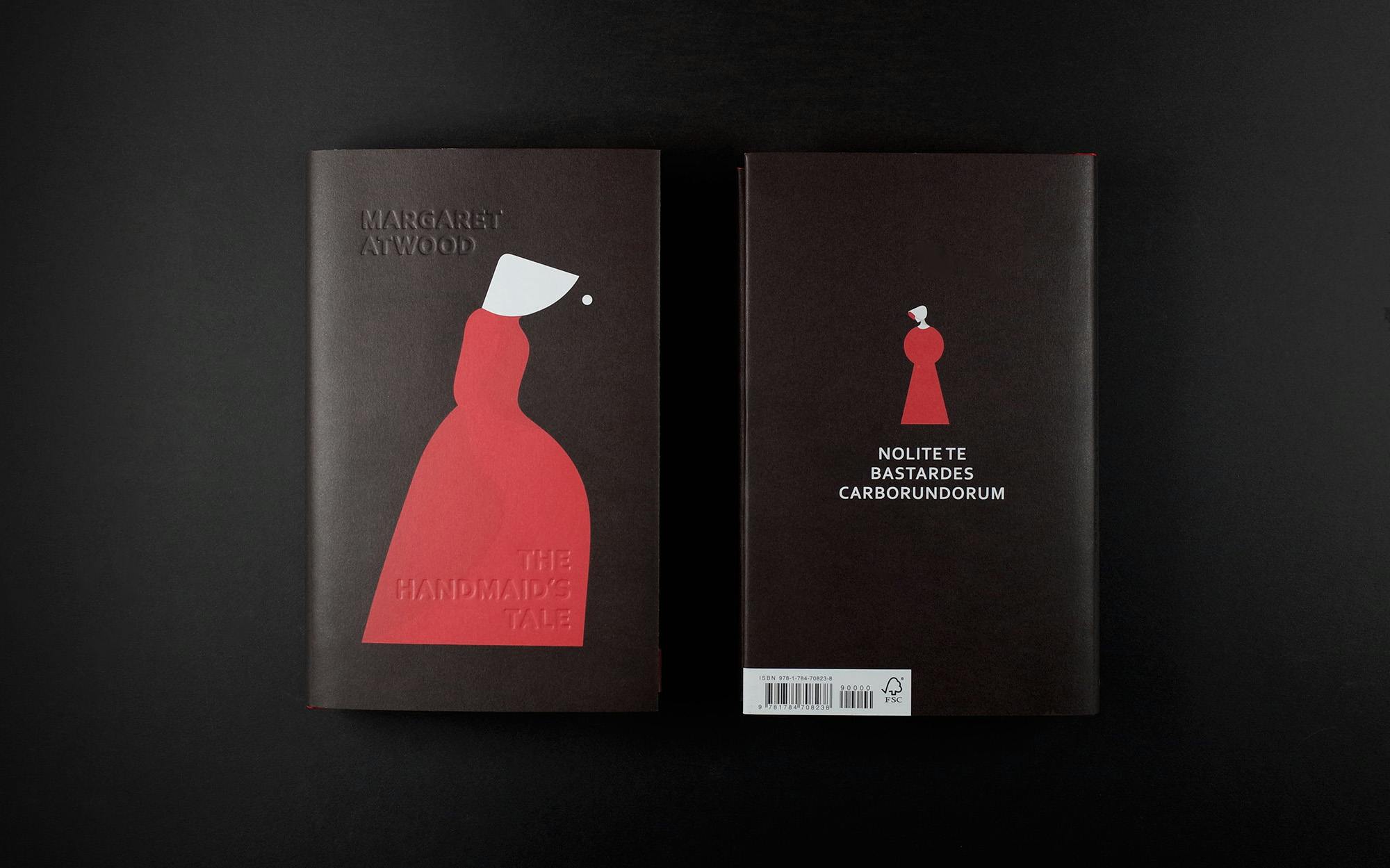
2021 – Again a Penguin cover due for release next year depicting a handmaid from above and her shadow is cast in the shape of a keyhole symbolising her imprisonment with the wall beyond. This is a conceptual cover that isn’t as literal as some of the others I have seen. I like the simplicity and the bleak feeling it portrays.

Recurring Motifs

  • Red/white/black colour scheme
  • Uniforms/hoods
  • The wall/brickwork
  • Faceless/lacking identity

For my designs, I decided to use mainly the uniform and the red, white and black colour scheme. The idea of the wall also snuck in there too.

The handmaid’s hood/hat was an interesting shape that I wanted to use, so this became my main element for my designs.

Screenshot 2020-04-20 at 14.07.47

I set up some artboards and started by designing the shape of the hood/hat. I then tried as many iterations as I could using this as either the focal point of the design, the basis for a pattern and using it as a type element. I also tried just using the colours to represent the uniform abstractly while trying to use some of the influences I had come across in the last exercise I ended up with 12 covers that I liked which I then asked my peers for their opinions on them. I was surprised at their varied tastes and the different preferences that they had. This illustrated to me why books can have several different cover designs to appeal to different audiences and markets.

Reflection

It was nice to get back to designing after a research-heavy section.

This was an interesting exercise in that it showed the evolution of a single book’s cover over the last 35 years and what may have influenced the designs and how styles and tastes have changed. As mentioned above, the feedback I received on my designs gave me an insight into different people’s tastes and how books have different covers depending on their audience. It has given me things to bear in mind when designing books in the future.

Book designers

This exercise hopes to broaden your understanding of other book designers’ work by looking at their cover designs. Start to identify the kinds of book covers you are drawn to, and critically assess why you think these designs are successful.

1. Undertake a combination of library and internet research into the following designers, identifying a number of book cover designs for each. Reflect on their conceptual and/or expressive approaches to design. Write a very brief description of your selected cover designs and a brief overview of the designer – try to focus on keywords rather than long descriptions. Do this in note form, using the designer and the chosen example design to visually inform how the information appears in your learning log.

    • Phil Baines
    • Coralie Bickford-Smith
    • Derek Birdsall
    • Kelly Blair
    • Irma Boom
    • Suzanne Dean
    • Julia Hastings
    • Linda Huang
    • Jost Huchuli
    • Ellen Lupton
    • Peter Mendelsund
    • Paul Rand
    • Paula Scher
    • Jan Tschichold
    • Wolfgang Weingart

2. Compare and contrast some of the cover designs. For example, how does the cover of Peter Mendelsund’s Kafka series compare with Coralie Bickford-Smith’s gothic horror series for Penguin? Are these expressive or conceptual in nature? Are they both conforming to genre expectations, or are they challenging them in some way? Do Jan Tschichold and Ellen Lupton’s cover designs have anything in common? Make a drawing, sketch or tracing of the covers you’re comparing to help give you a better understanding of the imagery, typography, and arrangement within the design. Use your learning log to reflect on your comparisons, identifying which covers you think are the strongest and why.

3. Now, select three or more designers from the list that you are particularly drawn to, either because you like their work or because you don’t understand their approach, and research their design careers in more depth. Think about how they’ve responded to very different design challenges, whether they have an underlying conceptual and/or expressive approach, and how their work has evolved over time. Continue to use your learning log to record their work visually, explore these covers through drawing, and your responses in note format. See this as a quick-fire activity rather than a long essay.

4. Finally, identify at least three different book designers you find visually engaging. To do this you might want to visit a library, bookshop, or browse online. Identify who designed these covers and find out more about them. Try to work out why you are drawn to them. Is it to do with genre or their approach to design? What is it about the design that captures you? What sort of imagery, if any, is used on the cover? How does the text relate to the image? What atmosphere or style does the cover evoke? Summarise your thinking in your learning log – focusing on the kinds of book covers you are drawn to and why – and continue to document what these covers look like.

Phil Baines

Phil Baines is a British typographer, graphic designer, and Professor of typography at Central St Martins College of Art & Design. He gained his BA in Graphic Design (1985), an MA in Communication Arts and Design (1987) at the RCA, and became a Fellow of the Higher Education Academy (2002). He has worked freelance since then for publishers such as Penguin Books, Phaidon, and Thames and Hudson. In addition to design work, he contributes to Eye magazine and other journals and has written four books: ‘Type and typography’ with Andrew Haslam (Laurence King 2002); ‘Signs, lettering in the environment’ with Catherine Dixon (Laurence King 2003); ‘Penguin by design, a cover story 1935–2005’ (Allen Lane 2005); and ‘Puffin by design, 70 years of imagination’ (Allen Lane 2010).

Source: UAL

These designs by Phil Baines have a typographical approach, which given his background is understandable. The colour palette is limited to just two or three colours. They are very minimal in design and have a lot of white-space on the covers. The way the designs look makes the books seem very serious and sophisticated reads for the more dedicated reader.

Coralie Bickford-Smith

Coralie is a British designer, illustrator, and author who currently works as an in-house designer for Penguin books. She is probably most famous for her work on the Penguin Classics cloth-bound editions.

5SHERLOCK.jpgGreatGatCov.jpg4.jpg

Source: Coralie Bickford-Smith

Mostly she uses repeating patterns in her book designs reflecting elements from the novel. However, I did like the 50’s horror feel given to her Sherlock Holmes series. Again, the designer has used a limited palette and the books mostly feel sophisticated and elegant.

Derek Birdsall

Derek Birdsall is a British graphic designer and teacher who has, over the years, designed a wide variety of things from Penguin books to Pirelli calendars. He has designed books for the likes of the Tate, the V&A and even the Church of England.

Image result for Derek Birdsall

Image result for Derek Birdsall

Source: Orchard.co.uk

I really like these designs. They are clever, bold and don’t pull any punches. They are mostly conceptual and not too literal when it comes to the contents of the book. They entice the reader in by not giving away too much but just enough to tweak their curiosity with some sort of hidden meaning. They seem very stern and serious in nature.

Kelly Blair

Kelly Blair is the art director of Pantheon Books, an associate art director at Knopf, and freelance illustrator.

LakePeople.jpgBollClown.jpgFallingOutofTime.jpg

Source: Kelly Blair

There is a lot more variety of style with this designer. She uses imagery and symbolism to convey the concept of the books while not giving too much away. A limited palette gives simplicity and strength to the designs. The typographical hierarchy changes in the designs, some highlight the title while others highlight the name of the author.

Irma Boom

Dutch graphic designer born in 1960.  She studied graphic design at the AKI School of Fine Art in Enscheden. Irma Boom specialises in making books. She is a multi-award winning and her books are a part of the collection at MoMA in New York and the University of Amsterdam.

Image result for irma boom booksImage result for irma boom booksImage result for Lichtjahre: Zumtobel 2000-1950

Source: Moma

This artist plays with the form of the book as well as different printing techniques. The books are quite textural and seem to the reader a more of a rounded experience involving more of the senses than just a straight forward read. The books are very conceptual and don’t give much away as to the literal contents.

Suzanne Dean

Suzanne Dean is a British graphic designer who heads up the design team at Vintage, working on cover designs for contemporary and classic novels by Ian McEwan, Virginia Woolf and Haruki Murakami.

Image result for suzanne dean book coversImage result for suzanne dean book covers

I was instantly drawn to the James Bond covers by this designer with the bold colours and typography and elements from the stories. The simplicity of the designs appeals to my love of minimalism. Depending on the type of book and the target audience the techniques used vary, whether that is overprinting or embossing. Some of her books have dust covers, some are printed directly on the cover and some combine both.

Julia Hastings

Julia Hasting (born 1970 in Bremen, Germany) lives and works in Zürich.
She is the creative director of Phaidon Press. She studied graphic design at the Staatliche Hochschule für Gestaltung in Karlsruhe, Germany, and finalized with a diploma. From 1993 to 1998 she has been designing corporate identities, posters and books for cultural clients, then she moved to London to design books for Phaidon Press, working closely with Alan Fletcher. In 2000 she moved to New York to run the new design department as the Art Director for Phaidon Press Inc., and in 2007 she has taken over the design direction at Phaidon Press and moved to Zürich, Switzerland. She taught Publication design at the design faculty of the Cooper Union School of Art in New York from 2001 to 2003. She has given lectures about her work at the BRNO Biennale of Graphic Design, The AIGA New York, Pentagram New York, F.I.T., the University of Lima, Peru, Integrated Design Conference, Antwerp, and has been a jury member in numerous international design competitions. Since 2003 she has been contributing illustration work to The New York Times and The New York Times Magazine. She is a member of the AGI since 2000.

Image result for julia hastings book coversImage result for WA: The Essence of Japanese DesignImage result for SOTTSASS book

Source: Linda Hastings

These books were very interesting due to the ways that the designer pushed the boundaries of what a book should look like. Whether it is the Japanese Watoji style binding or the extra cover-board and spine to further encase the book’s contents. These books are all of very high quality and the production values reflect that.

Linda Huang

Linda Huang is a graphic designer based in New York. Her work has been recognized by The Type Directors Club, Print Magazine, The New York Times, 50 Books | 50 Covers, and It’s Nice That, among others. She is currently an associate art director at Vintage & Anchor Books, an imprint at Penguin Random House.

Source: Linda Huang

I like the simple colour palettes used for these books as well as the playful typography. Interest and depth are generated using subtle textures. The Agatha Christie uses bold bright colours to give it a retro edge as does the typography for the H.G. Wells novel.

Jost Hochuli

Jost Hochuli is a world-renowned book designer living in St. Gallen, Switzerland. He is the author of numerous books on graphic design and typography, including Designing Books.

Image result for Jost Hochuli book coverImage result for Jost Hochuli book coverImage result for Jost Hochuli book cover

These books speak Swiss typography all over them! The use of hierarchy, alignment, use of the grid, contrast and limited palette all point towards the classic style. They are all expressive as they give a hint as to the contents of the books.

Ellen Lupton

Ellen Lupton is a writer, curator, educator, and designer. She is Senior Curator of Contemporary Design at Cooper Hewitt, Smithsonian Design Museum in New York City. New projects include the books Health Design Thinking and Extra Bold, a feminist career guide for designers. Lupton is founding director of the Graphic Design MFA Program at MICA (Maryland Institute College of Art) in Baltimore, where she has authored numerous books on design processes, including Thinking with Type, Graphic Design Thinking, Graphic Design: The New Basics, and Type on Screen. Her book Design Is Storytelling was published by Cooper Hewitt in 2017. She received the AIGA Gold Medal for Lifetime Achievement in 2007. Recent exhibitions include Face Values: Understanding Artificial Intelligence and Herbert Bayer: Bauhaus Master. The Senses: Design Beyond Vision, Beauty—Cooper Hewitt Design Triennial, How Posters Work, and Beautiful Users. She was named a Fellow of the American Academy of Arts & Sciences in 2019.

Image result for ellen lupton booksThe ABC's of Triangle, Square, Circle - 9781616897987

Source: elupton.com

I particularly liked these covers as they were design-based.  Thinking with type clearly expresses what is inside the book with its theme based around type design and function. The Senses: Design Beyond Vision loos to be a very tactile book which fits with the theme of the book. This book is conceptual as the words on the cover evoke feelings, tastes and sounds. The third book appeals to me as it is a clear and simple cover which is conceptual in nature that portrays its message in the simplest form which fits with the Bauhaus movement.

Peter Mendelsund

Peter Mendelsund has worked as a dishwasher, a bookseller, a butler, a classical pianist, chicken farmer, teacher, cover designer, house painter, commercial composer, branding consultant, & writer. He is the author of four books: What We See When We Read, (“Welcome and fascinating”—Tim Parks, The New York Review of BooksCover (“Cover pushes us to reconsider what we think we know about the graphic representation of words and ideas.”—The New Republic) The Look of the Book, a forthcoming non-fiction work (Crown/TenSpeed, Fall ’19)—as well as Same Same, a novel (Vintage/Anchor, Winter ’18). He is the former Associate Art Director of Alfred A. Knopf and is currently heading-up a redesign of The Atlantic magazine while completing his second novel: The Delivery. Mendelsund has been described by the New York Times as “one of the top designers at work today,” and his design work has been described by The Wall Street Journal as “the most instantly recognizable and iconic in contemporary fiction.”

salle2.jpgflame.jpg

These 3 of Mendeslsund’s cover designs jumped out to me in particular. 2 used repeating patterns, one of which looks like cutout paper giving it a 3D feel, and the other is part of a series that all share the repeated pattern theme which helps identify them as part of the same series. The middle one is very clever and ironic. It plays with the typographical hierarchy and yet you still accurately read the title.

Source: petermendelsund.com

Paul Rand

Born Peretz Rosenbaum in 1914 and died in 1996, Paul Rand is a graphic design legend. Throughout his 60-years long career, he changed America’s opinion on visual communication. With his editorial designs, advertisements, and visual identity works, Rand brought avant-garde European ideas to the United-States, mixing visual arts and commercial design. His colourful combinations, the approach of typography and use of media translate his desire to “defamiliarize the ordinary“. His style consequently still have an impact on graphic design today.

Source: grapheine.com

Image result for art and illusionImage result for the second man edward grierson paul randImage result for evangelical theology karl barth paul rand

I knew Paul Rand as a logo designer but not as a book designer. These book covers I have chosen stood out to me for various reasons. The first I liked the overprinting and the geometric pattern made me think of M.C. Escher’s work. The second is made to look like overprint and has an air of mystery about it which lends itself to the novel. The third I picked as I thought that it could be interpreted differently by whoever was looking at it. I interpreted it as the blue and red representing heaven and hell and we were the thin line in between. However, I could be wrong…!

Source: paulrand.design

Paula Scher

Paula Scher is one of the most influential graphic designers in the world. Described as the “master conjurer of the instantly familiar,” Scher straddles the line between pop culture and fine art in her work. Iconic, smart, and accessible, her images have entered into the American vernacular. Scher has been a partner in the New York office of Pentagram since 1991. She began her career as an art director in the 1970s and early 80s when her eclectic approach to typography became highly influential. In the mid-1990s her landmark identity for The Public Theater fused high and low into a wholly new symbology for cultural institutions, and her recent architectural collaborations have re-imagined the urban landscape as a dynamic environment of dimensional graphic design. Her graphic identities for Citibank and Tiffany & Co. have become case studies for the contemporary regeneration of American brands.

Source: Pentagram

Paula Scher’s book covers for her own publications are mainly typographic in nature and vary from a monogram of her initials, to the typographic maps she painted where the cover folds out to a 3′ by 2′ poster portion of her map World Trade, To the oversized letters of her name playing on the designers’ joke about clients wanting to “make it bigger!”.

Jan Tschichold

Jan Tschichold was a prominent twentieth-century German typographer and book designer. He was a remarkable teacher and an author as well. He is best known for writing Die Neue Typographie and Typographische Gestaltung which became standard textbooks for the next generation of typographers. During his stay in England in the late 1940s, he was requested by Penguin Books to redesign their paperbacks, thus he supervised the redesign of 500 books. Furthermore, Jan Tschichold wrote a guideline based on typographic and composition instructions for editors and compositors at Penguin, the Penguin Composition Rules.

Source: Famous Graphic Designers

Gallery Tschichold: Design for the penguin paperback edition of The Great Gatsby by TschicholdImage result for Die neue TypografieImage result for jan tschichold book covers

These covers are all minimalist which give the bare minimum of information needed in the most straight forward way. The Penguin covers are a staple of anyone’s collection and were refined by Tschichold in the 1950s. The other 2 are typographic with the Penguins Progress showing the design of the letterform and Die Neue Typographie showing all that’s necessary on the cover.

Wolfgang Weingart

Weingart was born near the Swiss border of Germany, in the Salem Valley, in 1941. He enrolled in a two-year course in applied art and design at the Merz Academy in Stuttgart in 1958. There he discovered the school printing facilities and, at the age of 17, set metal type for the first time. After graduating, he undertook a rigorous apprenticeship as a typesetter at Ruwe Printing in Stuttgart.

Wolfgang Weingart is an internationally recognized figure for his iconic body of work in the field of graphic designing and typography. His work is characterized as Swiss Typography. Moreover, he is deemed the pioneer of ‘New Wave’ or Swiss Punk typography.

Source: AIGA

Source: Famous Graphic Designers

Image result for Wolfgang Weingart book coversWWeingart4Image result for Wolfgang Weingart book covers

I hadn’t heard of this guy before, but as soon as I saw his work I was immediately hooked. He was one of the pioneers of experimental typography and this shows in the above covers. There are typographically led and aim to break the rules and the grids of traditional typography. They use type to add interest and as a design element rather than just to convey information.

Part 2

The first 2 covers I have compared are Designing Books by Jost Hochuli and The Great Gatsby by Jan Tschichold.

img_2736

I started off by trying to figure out the grid used on the covers of which some elements were very similar, Both books had vertical type elements down either side of the cover; both had the titles aligned to the centre; both had non-typographical elements on the cover to help divide it up; there is a clear use of hierarchy on both covers with the title being the most important piece of type; both use a single font to give a coherent feel. The Penguin book does have a lot more elements on the cover and the publisher is a lot more prominent in the design. The spacing of the elements on both covers has been given a lot of thought to where they should be placed and aligned carefully to the underlying grid. The image of the penguin is the only imagery used on these books as both are fairly minimal and give just the necessary information to the reader. The Penguin book is visually more attractive as this is aimed at a wider audience than the other which is quite a niche reference book. However, saying that, I prefer the Jost Hochuli cover because of its Swiis utilitarian simplicity and minimalism.

Next, I picked Wolfgang Weingart and Ellen Lupton.

img_2749

Both of these covers appeal to me. The Bauhaus simplicity with specific rules to be followed of Ellen Lupton’s book and, what appears to be, the chaos of Weingart’s. The Bauhaus shapes of Lupton’s book dictate the placement of the other elements on the page which gives it a very pleasing and ordered look. The title and the sub-heading take second-stage to the imagery in this case with the authors coming last. I did have some trouble trying to work out what the authors’ names were lined up with, but found it eventually. The chaotic cover of the other book leads you to believe that there is no reason for the placement of the typographic elements. It is only when you add a grid to the work that it makes more sense. Having gone back to my sketch of the grid on this one did I begin to wonder if there was some sort of golden ratio/Fibonacci spiral going on which adds weight to the placement of the type. Some non-typographical elements help to balance the design and lead the reader’s eye to where the designer wants it to go. There is some very strong typographical hierarchy here which doesn’t pull any punches about what order you are supposed to read the type. As I said earlier, I like both of these covers but I am drawn to the Weingart cover as I find this more intriguing and interesting to look at.

The final 2 covers I have chosen are by Linda Huang and Paul Rand.

img_2738

I chose to compare these covers because at first glance they are a million miles apart in their design. However, both covers are divided straight down the middle, both vertically and horizontally. Both designs maintain the proportions set out by the grid which gives them both a cohesive look. Linda Huang’s title font maintains its weight in proportion to its size and even though they differ in size and weight they all align with each other. The cover has some texture within its colour by being bespeckled with white and orange representing the dust of the title. This gives it an expressive feel. Paul Rand’s cover has a very strict grid which is set out by the geometric pattern in the image. Each of the 4 segments created by the centre lines is divided into equal thirds with the type aligning to them. Rand brakes up the page using blocks of colour and overprinting, adding to its geometric look. I think of these 2 books I prefer the Paul Rand design because of the geometry used which, as I have said earlier, reminds me of Escher’s work.

Part 3

Derek Birdsall

I was particularly drawn to Derek Birdsall’s work predominantly by the covers he designed for the Penguin Books Education Series in 1971.

Image result for Derek Birdsall

I really liked the clever use of typography and the no holds barred, in your face approach to these books. They are very thought-provoking and can be controversial. These covers are conceptual in nature as they have an underlying message within them.

As well as these books he has had a very varied design career. He designed the first Pirelli calendar in 1964 that set the bar for every calendar to follow. He has designed for Monty Python right through to the Church of England.

Looking at his work overtime, it seems to have matured and become a lot less in-your-face and a little more mainstream.

Source: Graphic Journey

Suzanne Dean

The designer has worked at Vintage (part of Penguin Random House Group) for almost 20 years and has created covers for iconic titles and bestsellers from The Handmaid’s Tale to the Curious Incident of the Dog in the Night-Time. She has also created visual identities for Vintage series – including collections by Jane Austen, Haruki Murakami and Virginia Woolf

As previously stated, I was drawn to Suzanne Dean’s work with the use of bold colours, type and imagery to give the reader an instant idea of what was inside.

Her Bond covers do this particularly well giving them an air of mystery, even though you know that they are about Ian Flemming’s most famous creation. Even though they are all different in their use of type and imagery, you can still tell that they are all part of a series. These covers are conceptual in nature as they give you an insight into some of the stories’ elements, but they also have that nostalgic feel to the covers which also makes them expressive.

Image result for suzanne dean book covers

Her cover for Margaret Atwood’s The Handmaid’s Tale is a favourite of mine due to its pared-back simplicity. It gives an impression of the bleakness of the tale compared with the stark contrast of the bright red uniforms worn by the handmaidens which come to symbolise the resistance against the state. This is a very expressive cover design.

Source: Creative Review

Wolfgang Weingart

Wolfgang Weingart is recognized for his typographic explorations and teaching at the Schule für Gestaltung Basel, and who, through the work of his students, created a more experimental and expressive approach to typography that was influential around the world and was awarded the 2013 AIGA Medal for his body of work.

Image result for Wolfgang Weingart book covers

I was really drawn to this particular piece of Weingart’s work because it stood out as a piece of design that to the unfamiliar eye doesn’t look ‘designed’. This is definitely a conceptual book cover as it is very direct and tells you exactly what is inside.

Image result for Wolfgang Weingart book covers

This is the cover of his book covering his life’s work first published in 1999. I feel that the cover of this book again is conceptual but is aimed at a more mainstream market and isn’t as experimental as his earlier work. There are still elements of the Swiss-style minimalism in the way that the bare minimum of the title is shown without it becoming unreadable and the grid structure is very clear.

Source: AIGA

Part 4

Tom Lenartowicz

Tom is a graphic designer based in Oslo, Norway. He graduated from Falmouth College in 2009 before moving to Norway.

I’m not sure if these designs are real or just an exercise, but I really like them in their simplicity and cleverness. They all use typography very cleverly to illustrate the stories within. I particularly like the first 2 and think that the use of type to depict the title and story are used brilliantly.

Adronauts

Adronauts is a creative collective founded 2013 in Vienna. Patrick Pichler and Wolfgang Warzilek working together in the creative fields of Advertising, Graphic Design, Illustration and Branding.

This again is a simple yet clever use of typography to depict the cover of this classic Orwell novel using the nine from the title and repeating it to give the impression of prying eyes watching you.

Another cover by these guys for a novel entitled Kidnapped again uses clever typography depicting one of the letters missing, presumably kidnapped.

Sara Comer

Sara comer is a designer and illustrator based in New York.

I like the way that the designer has cleverly used typography to illustrate the book’s title. It reminds me of the Suzanne Dean cover for the Handmaid’s Tale but this one is more typographic in nature. This cover is a conceptual cover as it alludes to the main character in the book.

These 50 awesome book covers will inspire you | Best book covers ...

Paul J Bartlett

Paul J Bartlett is a freelance art director, designer, and illustrator based in Madison and Milwaukee.

This is a very clever cover combining 4 photographs of the main characters to form one single image for the cover with an overlaid colour to tie them all together. This time the typography is not the main element and is fairly minimal, but works very well with the imagery.

Mark Robinson

Mark Robinson is an interesting chap. He classes himself as a designer; art director; filmmaker; and musician. I couldn’t find much information on his design career, just lots on his musical escapades.

This book cover really amused me, both as a designer and as an ex-chef. The idea of food running out and this being depicted on the cover as an empty food carton with the label used to display the type was an unusual and ingenious way of illustrating the book’s subject matter. I really liked the quirkiness of the idea and the execution is spot-on. The image is so convincing, it looks like it is sat on top of the book cover.

book, The End of Food by Paul Roberts

Conclusion

This has been a tough one to get into. But once I did and began to research the various book designers I found it very interesting. I hadn’t heard of the majority of the designers and some led me to discover new styles of designing book covers and new art styles. This has given me more of an insight into how books are designed, and how various designers approach the subject differently.

I feel that I am drawn more to typography-based book cover designs and covers that are clever in their approach to the subject matter as these appeal to my creative leanings and my sense of humour. Hopefully, I can use some of this research as inspiration for future projects.

Paper binding and choices

The kind of stock you choose will be informed by the nature of the job you’re doing. If you were working commercially, then checking paper quality – the weight and finish of the paper – is something you would do with your client, as paper choices can add both quality and cost to a design job. The advent of high-quality digital printing in almost every high street has made high finished standards much more achievable and affordable – although you might be amazed at what can be achieved with a photocopier and coloured 80gsm paper!

Knowing what papers are available and their qualities is an important part of what you might offer as a commercial book designer. One way to do this is by requesting sample books from commercial paper merchants or talking to your local printers, who can give you a swatch of the papers they recommend for you to share with your client and keep for future reference. Another way of doing this is by looking at as many different kinds of books as you can and critically start to gauge the weight, grain and finish of the papers. Do all books keep the same paper choices throughout? What’s the relationship between the covers and the paper inside? Which books do you like the feel of, and why?

Analyse the binding style of the books you’ve collected. How does the book block adhere to the cover? How does it adhere to the spine? Is it stitched or glued? You’ll notice that in case-bound or hardback books, the sections, or signatures, are sewn together and glued to the spine. Paperback books, on the other hand, are more likely to be ’perfect-bound’, where the pages are glued together and then directly onto the covering.

Analysis

The Body, a guide for occupants – Bill Bryson

This book block isn’t actually attached to the spine, it is held in place by the endpapers/hinge. There is a small gap between the book block and the spine. The pages are stitched together and have a dark blue headband to match the endpapers of the book. I believe this is known as being ‘case-bound’.

Modernist Cuisine: The Art and Science of Cooking – Maxime Bilet, Nathan Myhrvold, Chris Young 

This set of books contained 2 different binding styles. The main 5 volumes are bound in a similar way to the Bill Bryson book above with the addition of a ribbon sewn into the headband to be used as a bookmark. The stitching is a lot more visible in these books, this could be down to the paper quality and high value of the books. The Kitchen Manual volume is spiral bound allowing it to be laid flat while being used so that it doesn’t need to be held or the reader doesn’t have to worry about the pages turning over mid-recipe. The pages are all individual(no signatures) which also assists in the book being laid flat.

Do Androids Dream of Electric Sheep? – Philip K Dick

This book is ‘perfect bound’ meaning that it is not stitched together. They are glued together which is a much cheaper and faster way of producing books. The pages are glued onto a strip which is then glued into the cover. They are glued flush to the cover which does not extend beyond the book, unlike hardcovers.

Gigantosaurus – Jonny Duddle

This children’s book has its signatures stitched together. These are then glued into the cover. The book block is glued down the spine and hinge. The hinge is around 80mm and helps hold the book block in place.

The Ipplepen Magazine

img_2656

This publication is ‘saddle-wire stitched’ which is another term for stapling. This is a cheap and easy way to bind pages together for small publications such as pamphlets, booklets and zines.

David Copperfield – Charles Dickens