Following the exercise on mocking-up your designs I decided that I needed to know more about the print side of the design world and what their requirements were from designers.
I approached a local firm Newton Print who were more than happy to let me come in and talk to them and have a look around their premises. I had arranged to meet their Sales and Marketing Manager, Simon Besley. But on arrival, while waiting in reception to meet Simon, the Studio Manager came back from his lunch. He happened to be a guy I had originally done my Graphic Design diploma with back in the early 90s! Small world! As Darren(the Studio manager) and I knew each other Simon decided to let Darren give me the tour. We started off with his role in the business. Darren was responsible for vetting all the artwork submitted by designers, making sure everything was the correct spec and all the required information was there to enable the printers to do their job. I asked Darren what he required from designers in order to get it ready for print? He said that basically he needed a high quality PDF with the correct bleed and colour settings(CMYK) and any other special requirements such as spot colours or special finishes. The design was then laid out ready for print depending on the format of what was being printed. From there Darren took me through to the plate room where the laid-out designs were made into the plates need for the printer in the 4 process colours. These are then loaded into the 6 drum offset printer(Cyan; Magenta; Yellow; Key; Spot colours and varnishes). The printer checks the printed pages to make sure everything lines up and the colours are true and then passes it to the binders where it is trimmed to size and bound in the required spec. Darren also showed me a fairly new digital printing press that they had that was used for more bespoke designs and small print runs.
The main piece of advice I can take away from this visit is to ‘talk to your printer’. The guys at Newton Print couldn’t stress this more as it was more important to iron out any problems early on before going to print and it being too late!
Some of the goodies from the guys at Newton Print
I feel that this was a worthwhile thing to do as it gave me a really good insight into the print process. Also being able to ask the printers what they would ideally like to be given by designers is invaluable when it comes to producing work for print. Getting to know and being on good terms with a good printer is one of the pieces of advice taken from the book Print & Finish by Ambrose/Harris(from the reading list).
How do you approach being self-critical? What issues does it raise? Do you have friends, family, colleagues or a group who will critique your work for you?
I think that my self-critiquing process goes through many stages and revisions. Initially I have to try and stand back and detach myself from the process of designing and try to view from the client’s perspective. This can be difficult as design is a very personal subject and what is pleasing to some may have the opposite effect on others. New or redesigned products/identities usually have to stand up to some extreme views from both ends of the spectrum. Also the design process can be very blinkered and the final design will reflect that. Saying that, focus isn’t a bad thing!
Some recent major logo redesigns that haven’t been received very well.
Previous design work I have done has undergone several revisions through meetings with and feedback from clients. I have also used friends and family to give me an outsider’s opinion as they are usually impartial and will give an honest initial reaction.
As of yet, I haven’t used the OCA community for critique purposes but have critiqued others on the various groups. However, going forward I will be using it more as I have made some good connections and it’s always good to get feedback from peers in the same line of work as yourself.
You have been asked to design a leaflet for an organisation, inviting people to to volunteer for a task. (You can choose the task for example, school governor, fundraising or building a community garden). In addition to a title the information has been broken down into four chunks each of about 120 words. You will also need to leave space for contact and address details.
Working with a sheet of A4 paper or larger if you prefer, and ignoring the actual words and subheadings, explore the different formats for leaflets that are possible. Consider and experiment with options for final size and types of paper as part of your visualisation.
Where to start…?
So, this exercise is about making mockups and not about the product itself.
I started by picking up some A4 paper and seeing how many different ways I could fold it. I folded in into all the ‘usual suspects’ and found it hard to go from there.
I then did some brief sketches of folds in my sketchbook, but again this was very limited.
So I decided to see what I could find in the reading list supplied by the college. The book Print & Finish by Ambrose/Harris(from the reading list) has a section on folding. It covered a variety of folds and techniques such as valley and mountain folds; throw outs; gatefold; French fold; concertina fold and roll fold. I hadn’t heard of some of these before and it was nice to familiarise myself with the terminology and what it referred to.
These were all pretty straightforward folding styles that I was familiar with, so I continued to search for some more creative folding and created a Pinterest board of interesting folded leaflets that caught my eye.
I was really impressed with the variety of folds and cutouts and shapes of leaflet designs out there. The variations of shapes intrigued me as a straight forward sheet of A4 can only be folded in so many ways, but then when you start adding different shapes to document it opens up to so many more design possibilities. My research lead me to a site of a company called Foldfactory that specialised in creatively folded leaflets and print solutions.
At this point I thought I’d better decide who I was going to design a leaflet for…
The charity I chose is one that is close to my (rugby)heart – Wooden Spoon, the children’s charity of rugby. Wooden Spoon is a charity that changes children’s lives through the power of rugby. Each year they fund around 70 projects, from community programmes and specialist playgrounds to medical treatment centres and sensory rooms. Since 1983, they’ve distributed over £26 million to more than 700 projects, helping more than a million children.
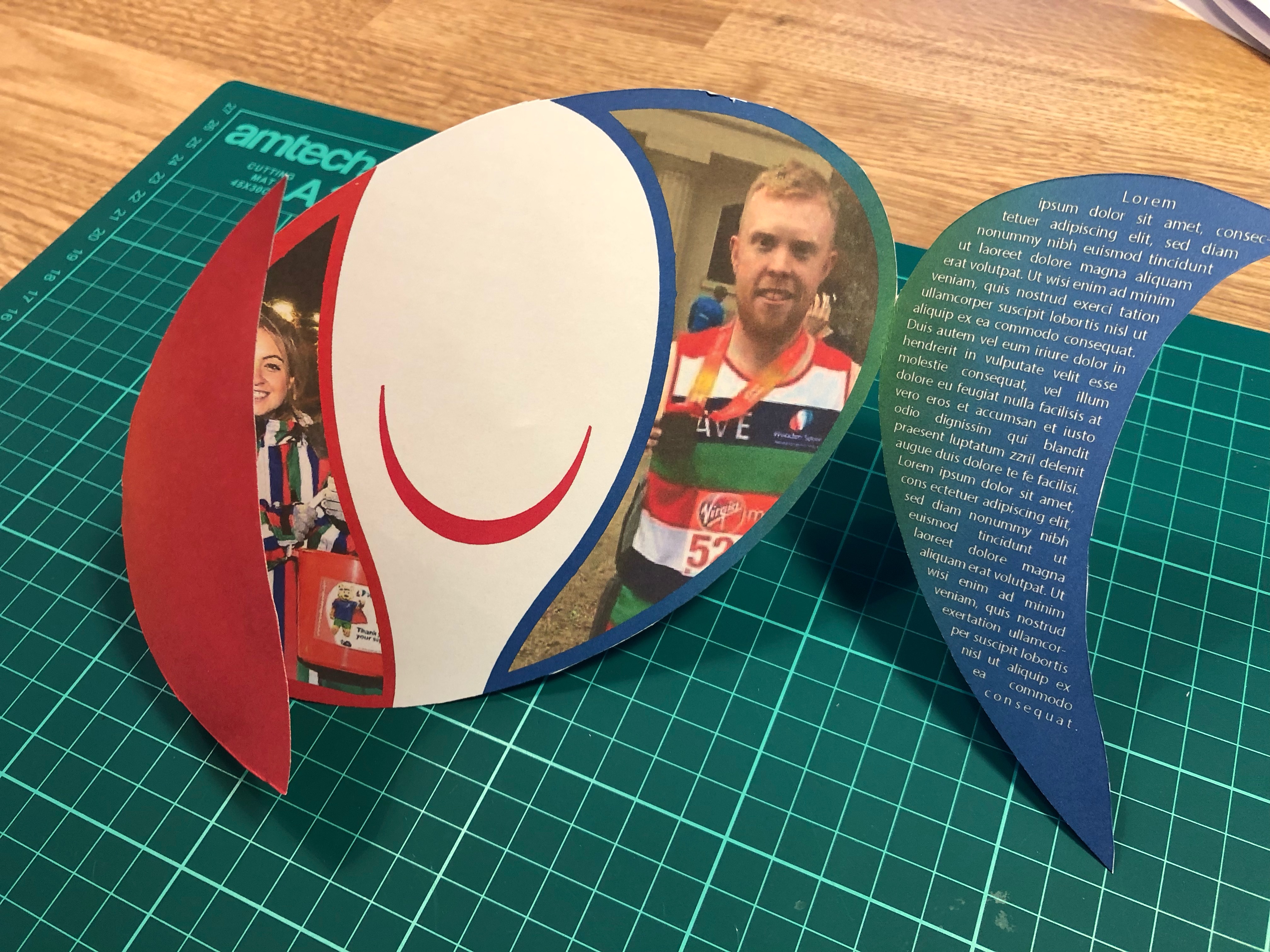
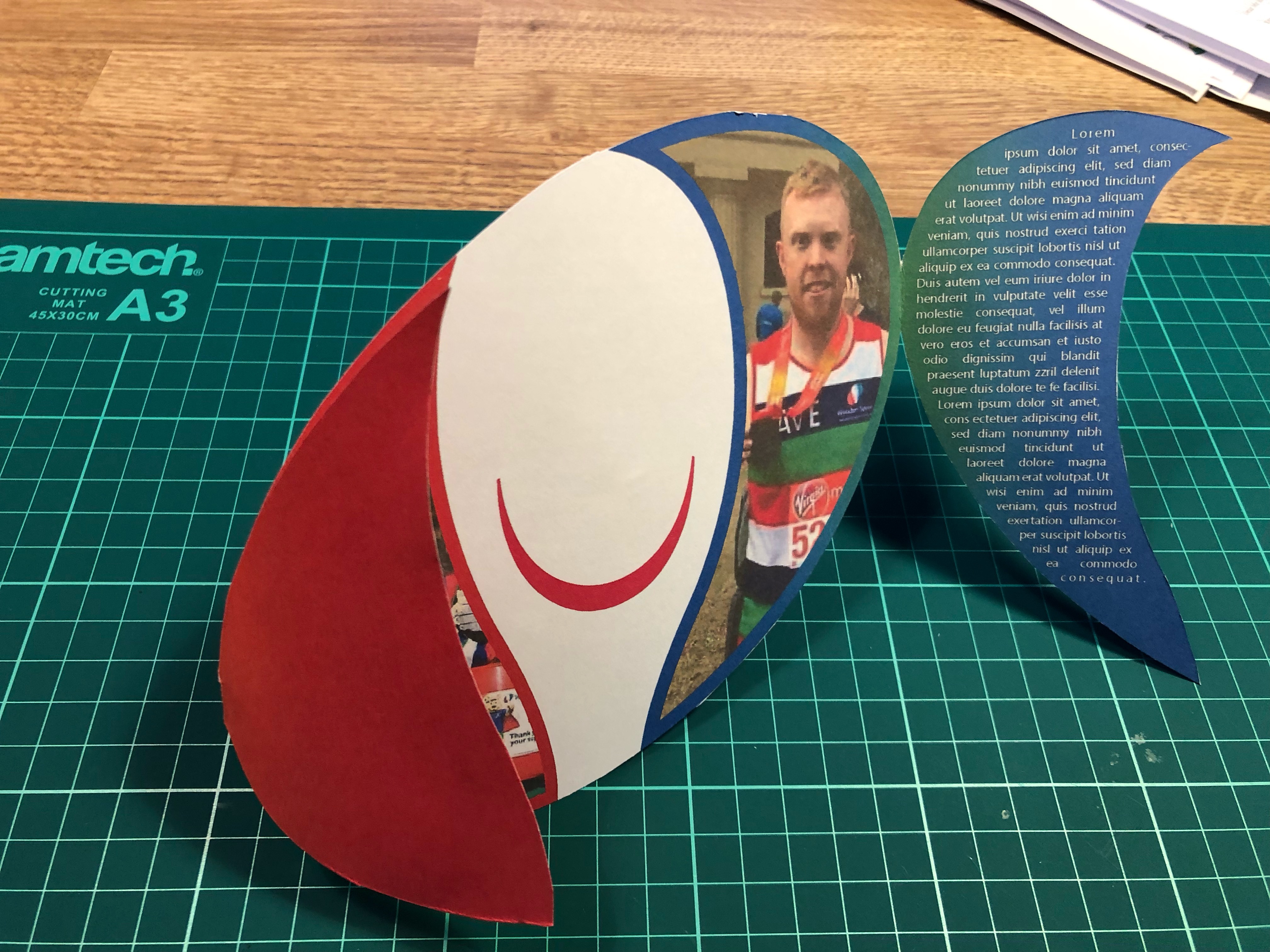
My research had led me to examples of different shaped leaflets which seemed to naturally lend itself to the Wooden Spoon logo. A rugby ball-shaped leaflet also seemed appropriate for the charity in question. Then the question was how to make the leaflet fit for purpose and eye-catching at the same time? Would it be a simple gate fold? A concertina fold? Roll fold? A simple bi-fold or concertina fold would be easy enough to do whether it be on the side or the top, this wouldn’t be very eye-catching though. The panels on the logo lent themselves to being used as a sort of gatefold. So how to make it work? I duplicated the red and green panels and looked at attaching them to the edges of the logo as the gatefold. Then I has to place the 4 chunks of text, contact form and a couple of images while maintaining the integrity of the original logo. Then to mock it up…
So, after raiding the children’s craft supplies I managed to find some card. The card wasn’t very thick which was ideal for what I wanted as I needed it to go through my printer. I printed my design on both sides of the card which I had to line up carefully which took several attempts and alterations to Illustrator’s print preferences. I managed to get it roughly lined up, but due to the way the paper/card is pulled through the printer it was never going to line up perfectly which did annoy me. I then cut the leaflet out and trimmed the edges that hadn’t quite lined up correctly.
Self Assessment
Overall I struggled a little with this exercise as it wasn’t really specific enough for my liking. I’m relatively happy with the end product but I think it could be better. I understand that the exercise was about the act of mocking-up your leaflet to help picture what the final product would be like and not the design or the details of the final design. The final leaflet would need to be produced on thicker card as the card I used was too flimsy for what I needed it for which impacted on the leaflet’s ability to be freestanding. Also because of it’s shape I didn’t think it would be suitable to be standing up on it’s own, so I think it would be used either as a mail-shot or handed out in person. It could also be laid flat or have a bespoke holder designed. These options would in-the-real-world incur additional expense and would determine the viability of any final design.
Additional Research
Following on from this exercise I have decided to contact a local printing firm to arrange a visit and tour of the premises to get a better insight into the print industry and it’s requirements from designers…..
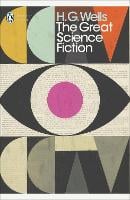
Your brief is to design a stunning and contemporary cover for one of the 20th century’s most acclaimed authors, HG Wells. Known mostly for his science fiction writing, HG Wells also wrote social novels that are still relevant today, covering topics such as the mid-life crisis, class, feminism, materialism, consumerism and love. Your challenge is to create cover designs for three of his books that work as a set and establish the books as timeless fiction. The books will be published in a paperback format and need to include the title, author’s name, publishers name and trademark. You only need to design the front cover and spine.
Following the previous exercise I decided to design myself a ‘Brief Analysis’ sheet to be able to set out in black and white what was needed to analyse briefs given to me. Indesign is not my strong suit, so this would be a nice exercise to blow the cobwebs away and familiarise myself with the software. Below is what I came up with:
This helped me to visualise what research I need to do and clearly showed the specs, inclusions and limitations of the brief.
My initial thoughts on reading the brief were that the main gist of it was to fit the books into the genre of ‘classic fiction’ as opposed to science-fiction. My perception of classic fiction included the likes of Shakespeare; the Bronte sisters; Joules Verne; Jane Austen and Agatha Christie. I knew I’d have to research this as well as how to put a contemporary spin on a classic. Classic fiction has minimal imagery on its covers as opposed to sci-fi that has a lot of imagery to appeal to its audience. The target audience of classic fiction is deemed to be a little more refined and well-read and not necessarily a particular gender. Sci-fi is aimed mainly at a male audience (with some exceptions). So, I think the designs will be of a minimal design, whether that’s imagery or text or both. Patterns may be a recurring theme that could be used to link the 3 books together as a set. As a minimal reader I don’t have any contemporary books to look at other than cook books! I am going to have to research the genre and see what’s out there and how it relates to the brief. I am aware of HG Wells and some of his stories, so I don’t foresee any complications on that front but I’m still going to revisit some of his titles.
Mind Maps:
So I then began to mind map some initial ideas for the book covers to see what initial ideas for the look and feel came to mind. I also mind mapped the keywords from the Brief Analysis.
Primary Research:
HG Wells
Herbert George Wells
Author
September 21, 1966 – August 13, 1946
Author, historian and champion of certain social and political ideals.
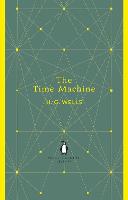
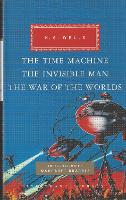
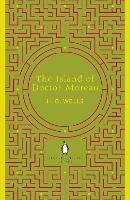
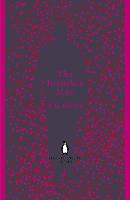
These are just a few of the book covers on the first page of the Waterstones website. They range in style, colour and depiction of the subject matter. The second and third examples are from the same series and have the same basic layout in order to link them together. Books four, eight and nine are part of a series but have a very different feel to the other two. Once I decide on the three book covers, I will look in more detail at the cover design.
Book Covers
As previously stated, I’m not much of a reader and don’t have any examples at home when it comes to fiction. So I started collating a Pinterest board of book covers and work relating to contemporary representation of classic and contemporary literature I liked.
Before the early nineteenth century, books were hand-bound, as in luxury medieval manuscripts using materials such as gold, silver and jewels. For hundreds of years, book bindings functioned as a protective device for the expensively printed or hand-made pages, and as a decorative tribute to their cultural authority. In the 1820s, change began to occur in how a book might be covered, with the gradual introduction of techniques for mechanical book-binding. Cloth, and then paper, became the staple materials used as books became more affordable, due to the introduction of steam-powered presses and mechanically produced paper. Not only were the new types of book-covers less expensive to produce, they were also printable, using multi-colour lithography, and later, half-tone illustration processes. Techniques borrowed from the nineteenth-century poster-artists gradually infiltrated the book industry, as did the professional practice of graphic design. The book cover became more than just a protection for the pages, taking on the function of advertising, and communicating information about the text inside.The monthly parts of Victorian novels published in instalments did sometimes come with illustrated wrappers. Dickens used green wrappers illustrated with characters and images from the relevant novels.
The Arts and Crafts and Art Nouveau movements at the turn of the twentieth century stimulated a modern renaissance in book cover design that soon began to infiltrate the growing mass book industry through the more progressive publishers in Europe, London and New York. Some of the first radically modern cover designs were produced in the Soviet Union during the 1920s by avant-gardists such as Alexander Rodchenko and El Lissitzky. Another highly influential early book cover designer was Aubrey Beardsley, thanks to his striking covers for the first four volumes of The Yellow Book (1894–5).
In the post-war era, book covers became vitally important as the book industry became commercially competitive. Many were illustrated, providing information about the genre and subject of the book, while many pushed typography and design to its limit in the hope of attracting sales attention. The era of internet sales has arguably not diminished the importance of the book cover, as it now continues its role in a two-dimensional digital form, helping to identify and promote books online.
Novels have provided an especially rich field for book cover design. This is partly because fiction so dominates the marketplace, and publishers seek to allure the passing browser, engaging illustrators and designers to suggest through the cover not merely what the contents of the book might be, but also what might be its special qualities, its singular imaginative space. Here the packaging of a given novelist in a consistent way, so that all of his or her works have a distinctive type of cover, can be especially effective. The author is given an oeuvre and made the creator of his or her own world.
The following article, “When It’s Acceptable to Judge a Book by its Cover,” by John Mullan, published in The Guardian, October 17, 2003, may be of interest on this subject.
I took a look at book cover design section in one of the books on the reading list for this course: Graphic Design: A User’s Manual. From this I noted down some key phrases and words:
Stand out
Cover regarded as first visual critique of the book itself
Do not try to tell the story
Readability – Covers can be viewed easily as a bookmark on a website as well as on the bookshelf
Book covers shouldn’t just stimulate, evoke, cajole, lure and tease the reader it should also stand out as a piece of creative work
The section in the book mentioned a few book cover designers. The one I found most interesting was Chip Kidd. I found a couple of TED talks that he has given which gave a light-hearted look into his career and the art of book cover design. I particularly liked the way he described what to leave out rather than what to include – either a picture of an apple or the word apple….not both!
I found another article with Chip in Smashing Magazine in which he is asked ‘Do you see the cover as part of the book?‘. His reply echoes what I read in Graphic Design: A User’s Manual that the book cover is not about the content of the book but an extra way of drawing the reader in, the book and story will do the rest.
I think that some of Chip’s designs are genius and use the cover as a story of their own. Others entice readers in by appealing to their curiosity or voyeuristic tendencies. However, Chip’s most widely seen creation is the dinosaur emblem for Jurassic Park which is recognised worldwide.
My book covers
From my mind maps I started to think which books to choose for this exercise. I decided to do The War of the Worlds; The Invisible Man and The Time Machine as these were the titles I was most familiar with. However, I wasn’t familiar with them as books only as films or in the case of The War of the Worlds – the Jeff Wayne album from 1978(which I have on vinyl!). The gatefold album has some great artwork in it the helps visualise the story but is too literal to be used on the cover of a book.
I mind mapped each of the book titles to see what I could relate to them and how to link them as a series. I wanted to avoid the covers being a cliché of the films or the musical version and made a conscious decision to steer away from ‘walking machines’ and ‘raincoats and sunglasses’.
I then sketched out a few layout ideas while trying to keep the theme of a series running through the 3 titles.
I then picked the series of 3 covers that I thought had the most potential for further development. I then roughly sketched these out larger to get a better feel for them.
I personally felt that the idea where the circles were repeated(above left) on all 3 book covers was the strongest of the ideas and began work on that one. I had also had an idea that the 3 books had a scientific element to them and each one seemed to relate to a particular science:
The War of the Worlds – Astronomy
The invisible Man – Biology
The Time Machine – Physics
I wanted to incorporate this into the design of the 3 books, whether that be the text being represented by elements from the periodic table(this didn’t work!) or a map of the solar system.
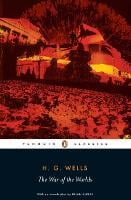
Initially I started with The War of the Worlds. From the mind map of this book title I had used the phrases ‘red planet’ and ‘blue planet’ relating to Mars and Earth – the 2 waring parties of the title. This one seemed the most straight forward of the 3 books as the 2 circles were going to represent the 2 planets. I wasn’t too sure on the background colour at first as I didn’t just want to do a black background as this seemed too obvious, so I toyed with a negative version of the sky(white with black stars) but this didn’t work. Looking at the current trend for sci-fi fiction covers it seemed quite a lot were black with bold foreground colours, so I decided to go with black but leave out the stars. Once I had the 2 circles on the black background the design looked flat, so I added a gradient to the circles. I still wasn’t happy but decided to add some text to see if that would help. I tried several fonts and eventually landed on All Round Gothic Xlight which is minimal and has a sci-fi appearance to it. Reversing the text out in white looked a little stark, I remedied this by using an off-white colour and reducing the opacity until I was happy with the feel and look of the book title. I then added the author’s name in the same size font. A publishers logo and name then needed to be added. I went for Penguin Books and researched what font was used in their logo – Gill Sans. The logo and text were then reversed out of the book cover again in the same off-white colour. The book cover was getting there but still wasn’t quite right. I then thought of adding The Moon to the blue circle to make it look like one of the ‘worlds’. I then wondered if Mars had any moons and found out that it has 2 – Phobos and Deimos. I added these to the book cover. A light source needed to be added, so I added the sun behind the ‘worlds’ in various locations and settled behind the blue one and adjusted The Moon’s shading to match. Now we were getting somewhere! It still looked flat so I went back to my mind maps and decided to add an industrial/metallic texture overlay to represent the martian fighting machines. That was it, I was very happy with the look and I felt it didn’t tell the story of the book too much and wasn’t too obvious or cliché.
The next book would be The Invisible Man. I had to repeat the circle design if I was going to make the books look like they were part of a series. My first thought was to have them represent the iconic sunglasses the character wears in the book, but I felt this was too literal. So for this book I used the biology element of my approach and used the 2 circle shape to represent a DNA helix. Keeping the red and blue from the previous design helped illustrated the twist in the helix by the gradient from red to blue was reversed on the second circle giving the illusion of it being 3D. As there were no planets in this one, the light source was moved behind the text to give a contrast to the red/blue design. The text and publisher’s logo were kept the same to help tie the books together as a series. On the final mock-up I also used the same metallic texture overlay which worked well and gives it more of a sci-fi feel.
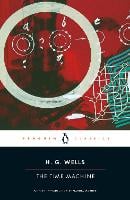
Final the third book, The Time Machine would follow the same format as the first 2 books in that the design was based on 2 circles. This time though it would be the physics of time travel and that it is infinite. So the 2 circles would make up an infinity symbol. Once I’d placed this in to the design it occurred to me that it also looked like an hourglass which also was very symbolic of time. I combined the 2 and again added a gradient to each of the circles, moved the light source to give the design a lift and added the text and publisher’s logo in the same style as the previous 2 books. On the mock-up the same overlay was used to give all 3 books the same feel and uniformity.
I kept the spines of the books simple in that they just contain the text and the Penguin Books logo reversed out of the black background with the light source from the covers repeated on the spines just to give it a little depth rather than flat black.
Self Assessment
I really enjoyed this exercise and I am happy with the outcome. Being the first time I’ve had to research a subject and document my findings was something I wasn’t used to and found it challenging to show how I had got to where I had. The research did lead me into a better understanding of the book cover design process and that the cover doesn’t have to tell the story, it can be a story of its own.
Regarding my designs, I like The War of the Worlds. It is the design that set the tone for the series and laid the blueprints for the design. It is simple in its elements and gives the impression of the ‘other-worldliness’ of the story without drawing on too much imagery from the story itself. It is minimal and clean as many contemporary book cover are in the same genre while still looking sophisticated and classic.
Overall I think all 3 books work together as a series. However the weakest of the 3 in my opinion is The Invisible Man, I don’t know if the DNA helix is obvious enough?
On the negative side, I think that I could have explored some of the other initial thumbnails rather than making my mind up straight away and sticking to it. I also could have explored different media and been a lot freer in my approach to the cover design rather than just jumping straight into Illustrator or Photoshop. The length of time taken on this exercise may also have detracted from the intensity of the research and the flow of the design process as I didn’t set a deadline.
These are extracts from briefs set as part of a student competition. Your task is to read and analyse them. Ask yourself:
• Whatare you being asked to do?
• How will the client will judge a successful outcome to the brief?
• What are the keywords?
In addition log any other questions you would want to ask the client.
Brief 1 Create packaging for Quaker’s new ‘Chilled Creamy Oats’ product for young women looking for a truly delicious healthy snack. The target audience is young women juggling many jobs and priorities everyday. They like to eat well but also love treats and hate feeling hungry. They like the idea of oats for their natural goodness but find the idea of eating them bland and unappealing.
Brief 2 Most of us have experienced a long rail journey – we witness the dramatic contrasts of the changing landscape, the inter-connections at various points along the way; various people embark and disembark; the dynamic is ever- changing… finally we reach our destination. This brief challenges you to take a metaphorical journey on the theme of connections. Explore the theme as broadly as possible and take us on a journey that might link, amongst other things – people, events, philosophies, theories, objects, movements, inventions, history, literature, etc. Your journey is only limited by your own imagination and the quality of your research – surprise us with the juxtaposition of your selected themes but be sure to communicate to the viewer the ‘connectedness’ of the thinking within your design. Define your market, and how you will target it.
Brief 3 To raise awareness of the risks of underage drinking and contribute towards a cultural change in society’s attitude towards alcohol. The purpose of the Department for Children, Schools and Families is to make this the best place in the world for children and young people to grow up… to make children and young people happy and healthy and help them stay on track. With a core proposition of ‘Alcohol leaves you (or your children) vulnerable’, the campaign will urge parents to talk to their children before they consider drinking, to help avoid vulnerable situations. The messages to young people will get them to think about the effects of drinking. Creative ideas should use the campaign identity ‘Why let drink decide?’ to extend the campaign’s reach and specifically target young people aged between 13 and 16. We are open to ideas about the media or format you think is most appropriate to reach the target audience.
Having analysed the briefs which one do you think you would most like to tackle? Is it the one with the most restrictions or the one that is most open to interpretation? What do you think your chosen brief would offer you? In what way do you think it would stretch your skills and abilities? Make notes in your learning log.
Brief 1
What?: Create packaging for a new snack
How?: It’s appeal to the target audience
Keywords: Chilled; Creamy; Young Women; Delicious; Healthy; Juggling priorities; Treat; Hate feeling hungry; Natural Goodness; Bland and unappealing.
Other questions: What company branding needs to be included?; POS?; Materials to be used for packaging; Colour pallette?; Sizes and dimensions; What nutritional info needs to be displayed?
Brief 2
What?: Communicate a journey to a defined audience. The journey doesn’t have to be a physical journey, it may be theoretical.
How?: It will be judged by the varied and diverse subjects covered and explored during the ‘journey’ and how they relate to their defined audience.
Other questions: Where/What is the start/endpoint?; What is the conclusion?
Brief 3
What?: Create a campaign aimed at parents and 13 to 16 year olds highlighting how vulnerable alcohol makes you. It will also urge parents to talk to their children about the dangers of drinking.
So the first assignment is ungraded and is to get you used to the way things work.
The idea of this assignment is to come up with at least 3 postcards that say something about myself…
So I decided to go with one postcard about my interests, one about my artistic influences and one about myself. One would be type-based, one digital and one illustrative…maybe. I listed some characteristics about myself. I listed my hobbies and interests. I listed the artists that I like and have interested me.
I started with the hobbies/interests postcard and decided that this would be the type-based one. I picked rugby and scuba for this design as they both consisted of 5 letters and have letters in common. Initially I wasn’t sure whether to make this more illustrative and depict these 2 words pictorially – representing rugby with mud and grass and scuba with an underwater element. The word scuba should be displayed below rugby as it is below the surface in real life. Should the text be reversed out of a scenic background image? I started to research type-styles that I liked and thought that maybe the 2 words could be overlapped in some way, whether their opacity would add to the design. Then I started to look at the negative space between the letters and how this could be used. The design was lending itself to just a type-based design rather than any pictorial elements.
I liked the negative space idea and began to wonder what the minimum amount of the text would you need to see and it still remain legible. So I picked a bold font and began playing around with the space around the letters and removing as much of the letters as I could and still read them. Here is the result for this postcard:
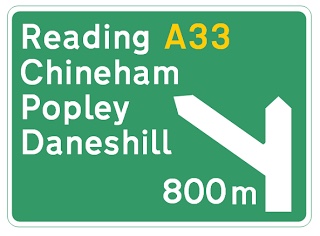
Next I began working on the design of the postcard about myself. There were a few characteristics on the list, the decision was which ones to choose? I decided that the fact that I had originally studied graphic design when I left school until my life took a different route was a good subject to base the second postcard on. The fact that it took that ‘different route’ gave me the idea of some sort of road sign.
My initial thoughts started with the fact that I had moved around a lot and the sign could depict the places I have lived before getting to this point.
Then I decided to use the fact that after gaining my diploma I took my life in a different direction before returning to graphic design and starting this course. I researched the font and colours used on British road signs and the format of suitable signs.
Here is the result for this postcard:
Now for the third and what I thought to be the trickiest of the 3 choices I’d made – my influences. My artistic influences that I chose to use were David Hockney, M C Escher and Paul Rand. Both Hockney and Escher I was introduced to when I did my diploma in ’93. Rand I have discovered in recent years after renewing my design interest. So I did some research into all 3 artists and chose Hockney’s pool scenes, bright and bold colours of Rand and Escher’s impossible shapes.
My first idea was to have a water-style background as in many of Hockney’s pictures. I tried to recreate using watercolours and masking fluid to little success.
This was the point where I discovered Photoshop watercolour brushes. These were a revelation! These new brushes only recently released were really good for the effect I desired. The idea for the design involved the watercolour background with an Escher shape coloured with Rand’s bold colours.
I was unsure how I would be able to render the movement of the water. I then thought that the Escher cube could be transformed into a mosaic tile-effect to overlay the watercolour layer. So I began to experiment turning the cube into a mosaic tile and also creating a watercolour base layer for the design.
As you can see, the Photoshop watercolour brushes worked really well. The Escher mosaic worked well too and I added some brightly coloured segments in primary and secondary colours.
When I combined the 2 to get the finished design I was pleasantly surprised at how well it had turned out as this was the one I was postponing and procrastinating about the most. Here is the finished postcard design:
So, after years of writing off the possibility of returning to graphic design I now find myself in a position to do so after a 25 year “break”. After working my way up the catering ladder in kitchens in the south-west and London, the arrival of my twin boys made me re-evaluate what I wanted out of life which didn’t include working in hot, sweaty kitchens evenings and weekends! I still needed a creative outlet and it was obvious to all around me that I needed to do something about it. I had also come to the same conclusion and began researching any possible way that I could complete my graphic design training and prove to myself that it is what I should have been doing all along while still holding down a job and bringing up a young family. I found a few choices of part-time online course providers and whittled it down to the OCA. I also found out that I could fund my studies with student finance which helped alleviate the financial worries of becoming a student again. With the full support of my wife and friends I decided to take the leap into the unknown which is why I am here now, a little excited and daunted by what lies ahead.


 Some of the goodies from the guys at Newton Print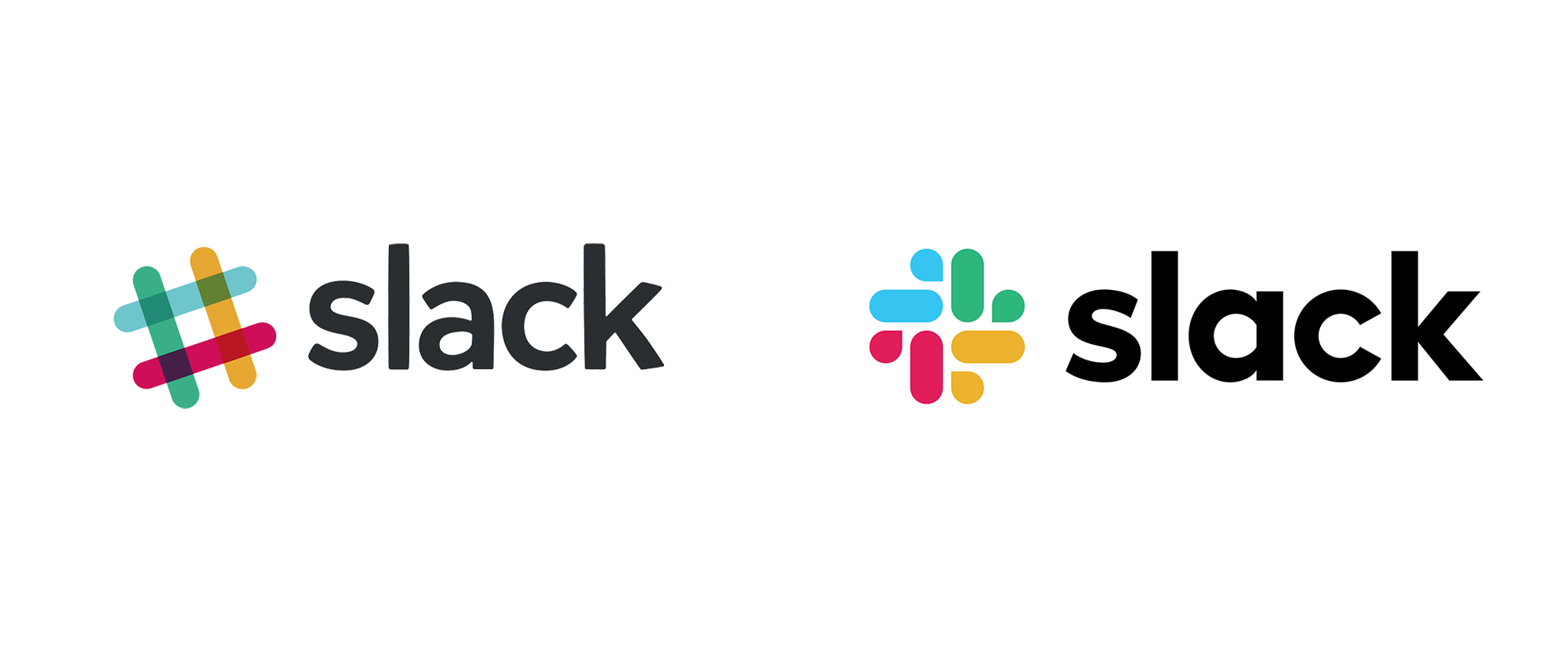








 So, after years of writing off the possibility of returning to graphic design I now find myself in a position to do so after a 25 year “break”. After working my way up the catering ladder in kitchens in the south-west and London, the arrival of my twin boys made me re-evaluate what I wanted out of life which didn’t include working in hot, sweaty kitchens evenings and weekends! I still needed a creative outlet and it was obvious to all around me that I needed to do something about it. I had also come to the same conclusion and began researching any possible way that I could complete my graphic design training and prove to myself that it is what I should have been doing all along while still holding down a job and bringing up a young family. I found a few choices of part-time online course providers and whittled it down to the OCA. I also found out that I could fund my studies with student finance which helped alleviate the financial worries of becoming a student again. With the full support of my wife and friends I decided to take the leap into the unknown which is why I am here now, a little excited and daunted by what lies ahead.
  craig519809.home.blog