This exercise hopes to broaden your understanding of other book designers’ work by looking at their cover designs. Start to identify the kinds of book covers you are drawn to, and critically assess why you think these designs are successful.
1. Undertake a combination of library and internet research into the following designers, identifying a number of book cover designs for each. Reflect on their conceptual and/or expressive approaches to design. Write a very brief description of your selected cover designs and a brief overview of the designer – try to focus on keywords rather than long descriptions. Do this in note form, using the designer and the chosen example design to visually inform how the information appears in your learning log.
-
- Phil Baines
- Coralie Bickford-Smith
- Derek Birdsall
- Kelly Blair
- Irma Boom
- Suzanne Dean
- Julia Hastings
- Linda Huang
- Jost Huchuli
- Ellen Lupton
- Peter Mendelsund
- Paul Rand
- Paula Scher
- Jan Tschichold
- Wolfgang Weingart
2. Compare and contrast some of the cover designs. For example, how does the cover of Peter Mendelsund’s Kafka series compare with Coralie Bickford-Smith’s gothic horror series for Penguin? Are these expressive or conceptual in nature? Are they both conforming to genre expectations, or are they challenging them in some way? Do Jan Tschichold and Ellen Lupton’s cover designs have anything in common? Make a drawing, sketch or tracing of the covers you’re comparing to help give you a better understanding of the imagery, typography, and arrangement within the design. Use your learning log to reflect on your comparisons, identifying which covers you think are the strongest and why.
3. Now, select three or more designers from the list that you are particularly drawn to, either because you like their work or because you don’t understand their approach, and research their design careers in more depth. Think about how they’ve responded to very different design challenges, whether they have an underlying conceptual and/or expressive approach, and how their work has evolved over time. Continue to use your learning log to record their work visually, explore these covers through drawing, and your responses in note format. See this as a quick-fire activity rather than a long essay.
4. Finally, identify at least three different book designers you find visually engaging. To do this you might want to visit a library, bookshop, or browse online. Identify who designed these covers and find out more about them. Try to work out why you are drawn to them. Is it to do with genre or their approach to design? What is it about the design that captures you? What sort of imagery, if any, is used on the cover? How does the text relate to the image? What atmosphere or style does the cover evoke? Summarise your thinking in your learning log – focusing on the kinds of book covers you are drawn to and why – and continue to document what these covers look like.
Phil Baines
Phil Baines is a British typographer, graphic designer, and Professor of typography at Central St Martins College of Art & Design. He gained his BA in Graphic Design (1985), an MA in Communication Arts and Design (1987) at the RCA, and became a Fellow of the Higher Education Academy (2002). He has worked freelance since then for publishers such as Penguin Books, Phaidon, and Thames and Hudson. In addition to design work, he contributes to Eye magazine and other journals and has written four books: ‘Type and typography’ with Andrew Haslam (Laurence King 2002); ‘Signs, lettering in the environment’ with Catherine Dixon (Laurence King 2003); ‘Penguin by design, a cover story 1935–2005’ (Allen Lane 2005); and ‘Puffin by design, 70 years of imagination’ (Allen Lane 2010).


Source: UAL
These designs by Phil Baines have a typographical approach, which given his background is understandable. The colour palette is limited to just two or three colours. They are very minimal in design and have a lot of white-space on the covers. The way the designs look makes the books seem very serious and sophisticated reads for the more dedicated reader.
Coralie Bickford-Smith
Coralie is a British designer, illustrator, and author who currently works as an in-house designer for Penguin books. She is probably most famous for her work on the Penguin Classics cloth-bound editions.


Source: Coralie Bickford-Smith
Mostly she uses repeating patterns in her book designs reflecting elements from the novel. However, I did like the 50’s horror feel given to her Sherlock Holmes series. Again, the designer has used a limited palette and the books mostly feel sophisticated and elegant.
Derek Birdsall
Derek Birdsall is a British graphic designer and teacher who has, over the years, designed a wide variety of things from Penguin books to Pirelli calendars. He has designed books for the likes of the Tate, the V&A and even the Church of England.


Source: Orchard.co.uk
I really like these designs. They are clever, bold and don’t pull any punches. They are mostly conceptual and not too literal when it comes to the contents of the book. They entice the reader in by not giving away too much but just enough to tweak their curiosity with some sort of hidden meaning. They seem very stern and serious in nature.
Kelly Blair
Kelly Blair is the art director of Pantheon Books, an associate art director at Knopf, and freelance illustrator.


Source: Kelly Blair
There is a lot more variety of style with this designer. She uses imagery and symbolism to convey the concept of the books while not giving too much away. A limited palette gives simplicity and strength to the designs. The typographical hierarchy changes in the designs, some highlight the title while others highlight the name of the author.
Irma Boom
Dutch graphic designer born in 1960. She studied graphic design at the AKI School of Fine Art in Enscheden. Irma Boom specialises in making books. She is a multi-award winning and her books are a part of the collection at MoMA in New York and the University of Amsterdam.

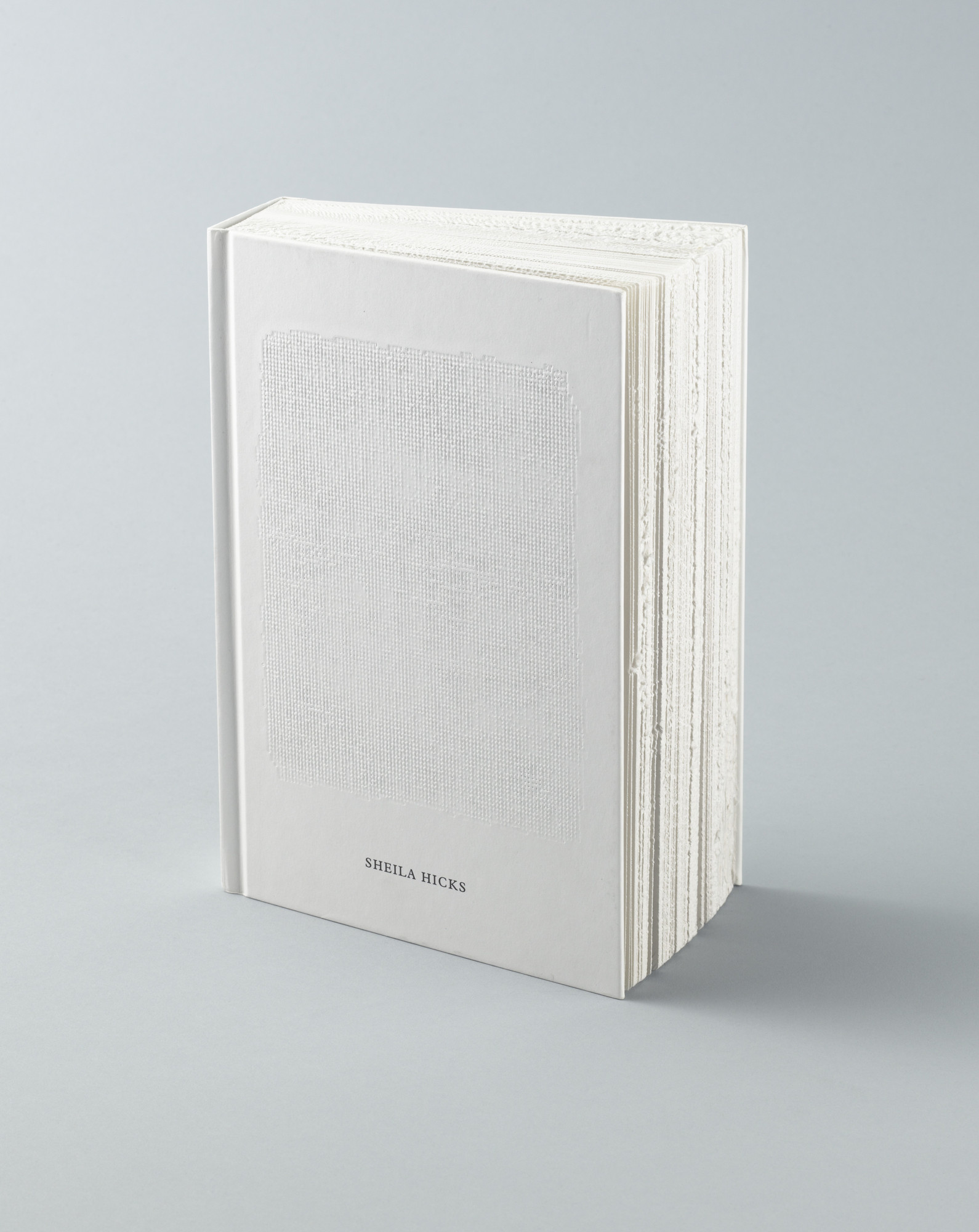
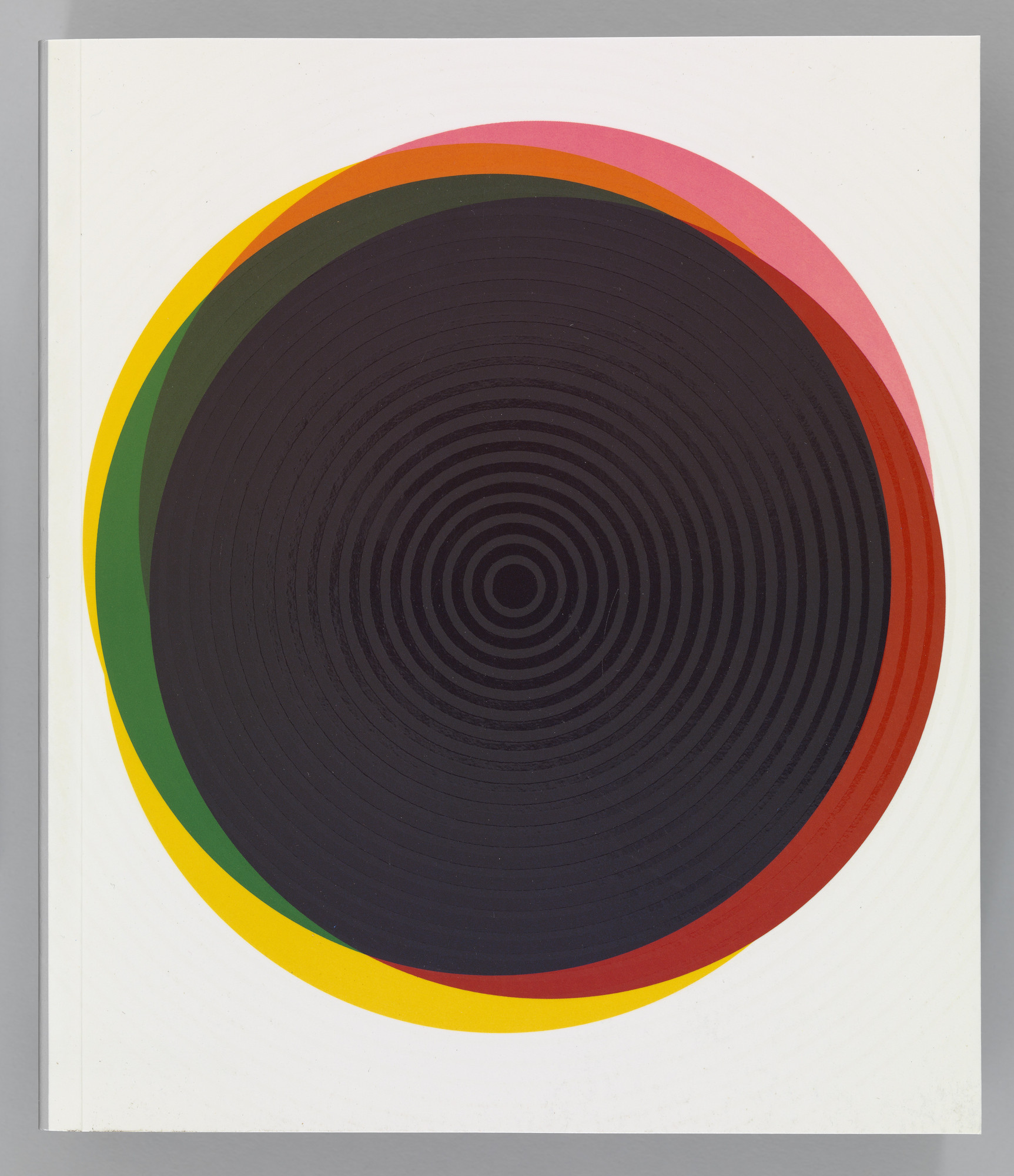
Source: Moma
This artist plays with the form of the book as well as different printing techniques. The books are quite textural and seem to the reader a more of a rounded experience involving more of the senses than just a straight forward read. The books are very conceptual and don’t give much away as to the literal contents.
Suzanne Dean
Suzanne Dean is a British graphic designer who heads up the design team at Vintage, working on cover designs for contemporary and classic novels by Ian McEwan, Virginia Woolf and Haruki Murakami.

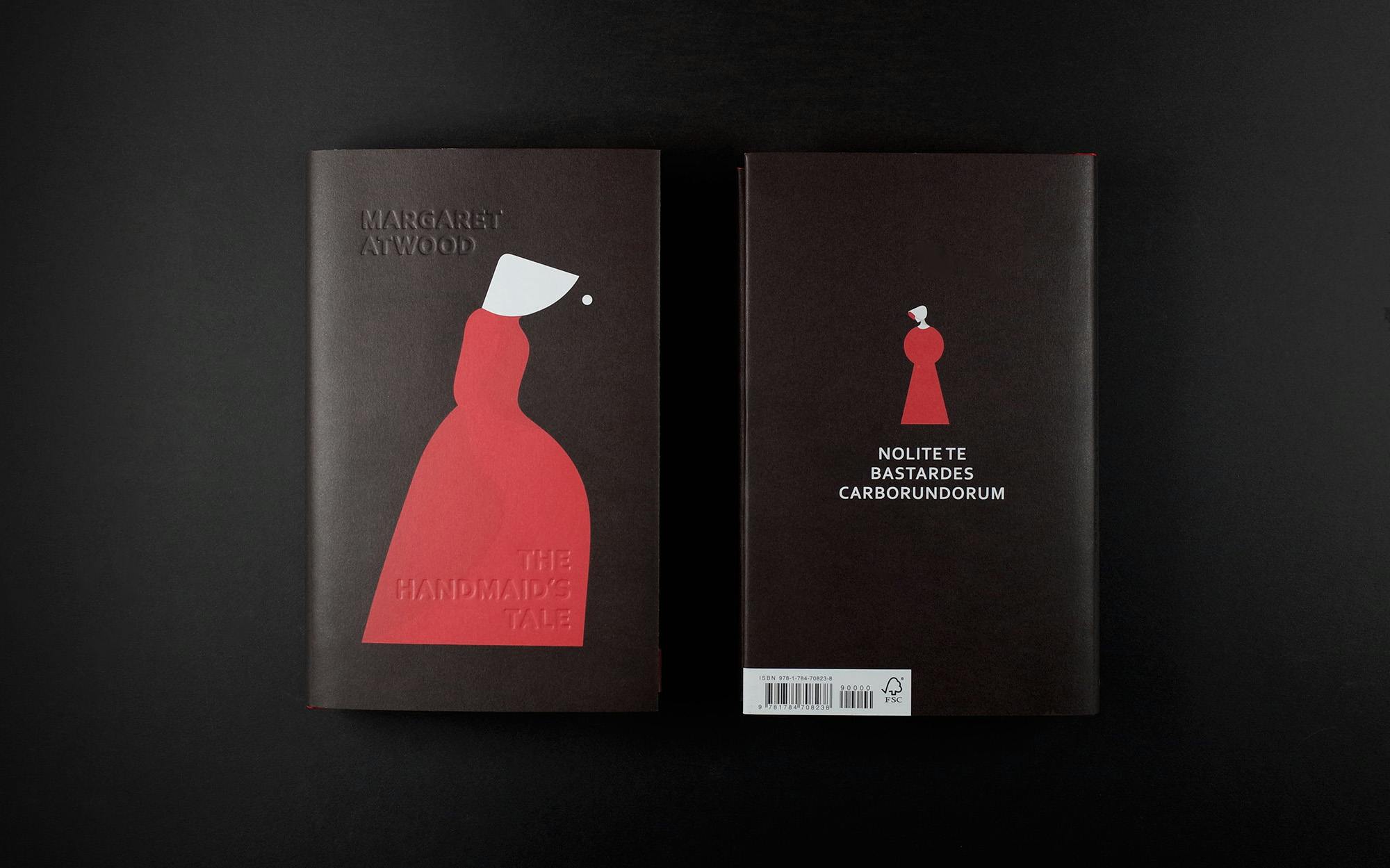

I was instantly drawn to the James Bond covers by this designer with the bold colours and typography and elements from the stories. The simplicity of the designs appeals to my love of minimalism. Depending on the type of book and the target audience the techniques used vary, whether that is overprinting or embossing. Some of her books have dust covers, some are printed directly on the cover and some combine both.
Julia Hastings
Julia Hasting (born 1970 in Bremen, Germany) lives and works in Zürich.
She is the creative director of Phaidon Press. She studied graphic design at the Staatliche Hochschule für Gestaltung in Karlsruhe, Germany, and finalized with a diploma. From 1993 to 1998 she has been designing corporate identities, posters and books for cultural clients, then she moved to London to design books for Phaidon Press, working closely with Alan Fletcher. In 2000 she moved to New York to run the new design department as the Art Director for Phaidon Press Inc., and in 2007 she has taken over the design direction at Phaidon Press and moved to Zürich, Switzerland. She taught Publication design at the design faculty of the Cooper Union School of Art in New York from 2001 to 2003. She has given lectures about her work at the BRNO Biennale of Graphic Design, The AIGA New York, Pentagram New York, F.I.T., the University of Lima, Peru, Integrated Design Conference, Antwerp, and has been a jury member in numerous international design competitions. Since 2003 she has been contributing illustration work to The New York Times and The New York Times Magazine. She is a member of the AGI since 2000.

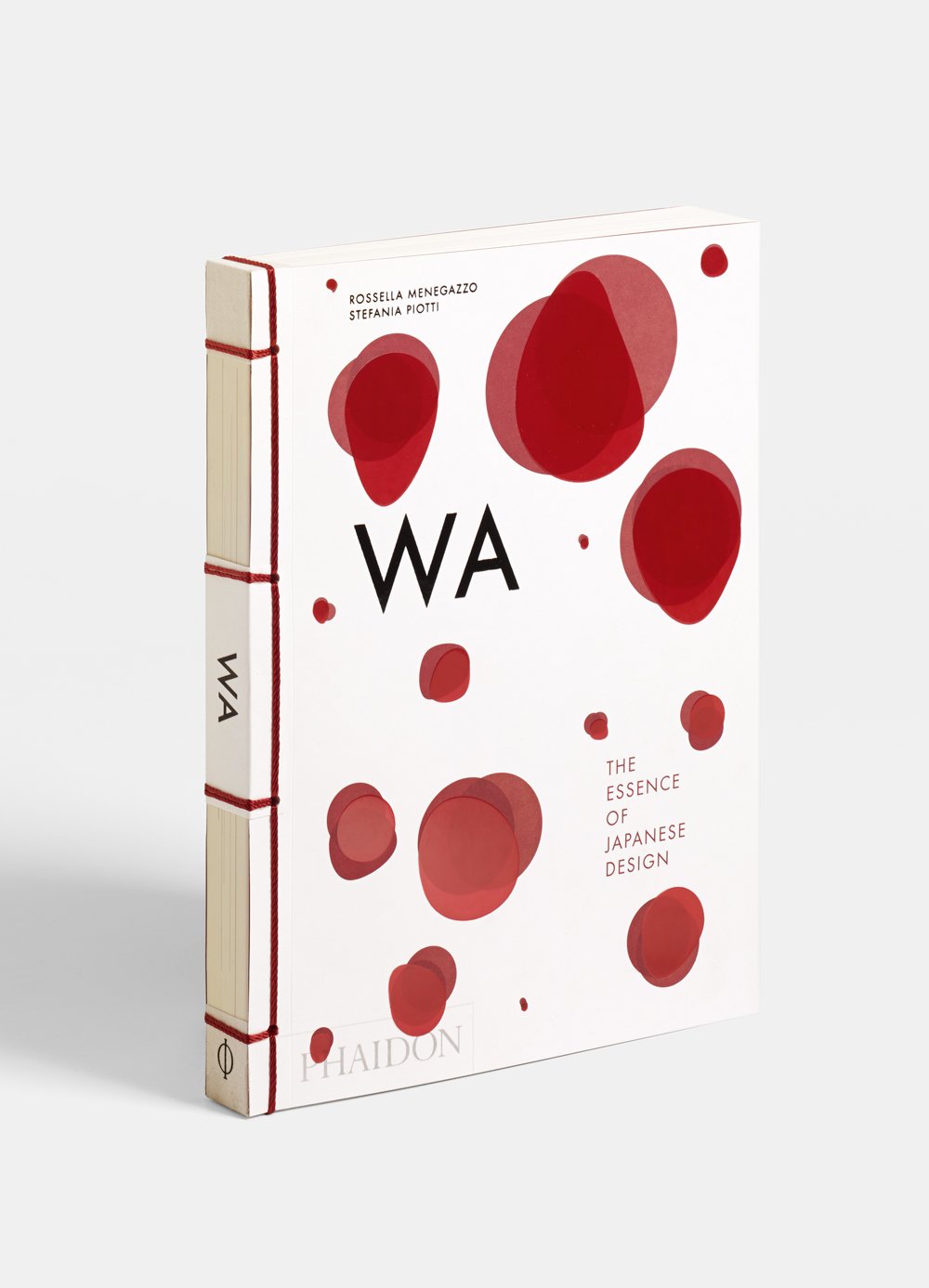

Source: Linda Hastings
These books were very interesting due to the ways that the designer pushed the boundaries of what a book should look like. Whether it is the Japanese Watoji style binding or the extra cover-board and spine to further encase the book’s contents. These books are all of very high quality and the production values reflect that.
Linda Huang
Linda Huang is a graphic designer based in New York. Her work has been recognized by The Type Directors Club, Print Magazine, The New York Times, 50 Books | 50 Covers, and It’s Nice That, among others. She is currently an associate art director at Vintage & Anchor Books, an imprint at Penguin Random House.


Source: Linda Huang
I like the simple colour palettes used for these books as well as the playful typography. Interest and depth are generated using subtle textures. The Agatha Christie uses bold bright colours to give it a retro edge as does the typography for the H.G. Wells novel.
Jost Hochuli
Jost Hochuli is a world-renowned book designer living in St. Gallen, Switzerland. He is the author of numerous books on graphic design and typography, including Designing Books.



These books speak Swiss typography all over them! The use of hierarchy, alignment, use of the grid, contrast and limited palette all point towards the classic style. They are all expressive as they give a hint as to the contents of the books.
Ellen Lupton
Ellen Lupton is a writer, curator, educator, and designer. She is Senior Curator of Contemporary Design at Cooper Hewitt, Smithsonian Design Museum in New York City. New projects include the books Health Design Thinking and Extra Bold, a feminist career guide for designers. Lupton is founding director of the Graphic Design MFA Program at MICA (Maryland Institute College of Art) in Baltimore, where she has authored numerous books on design processes, including Thinking with Type, Graphic Design Thinking, Graphic Design: The New Basics, and Type on Screen. Her book Design Is Storytelling was published by Cooper Hewitt in 2017. She received the AIGA Gold Medal for Lifetime Achievement in 2007. Recent exhibitions include Face Values: Understanding Artificial Intelligence and Herbert Bayer: Bauhaus Master. The Senses: Design Beyond Vision, Beauty—Cooper Hewitt Design Triennial, How Posters Work, and Beautiful Users. She was named a Fellow of the American Academy of Arts & Sciences in 2019.
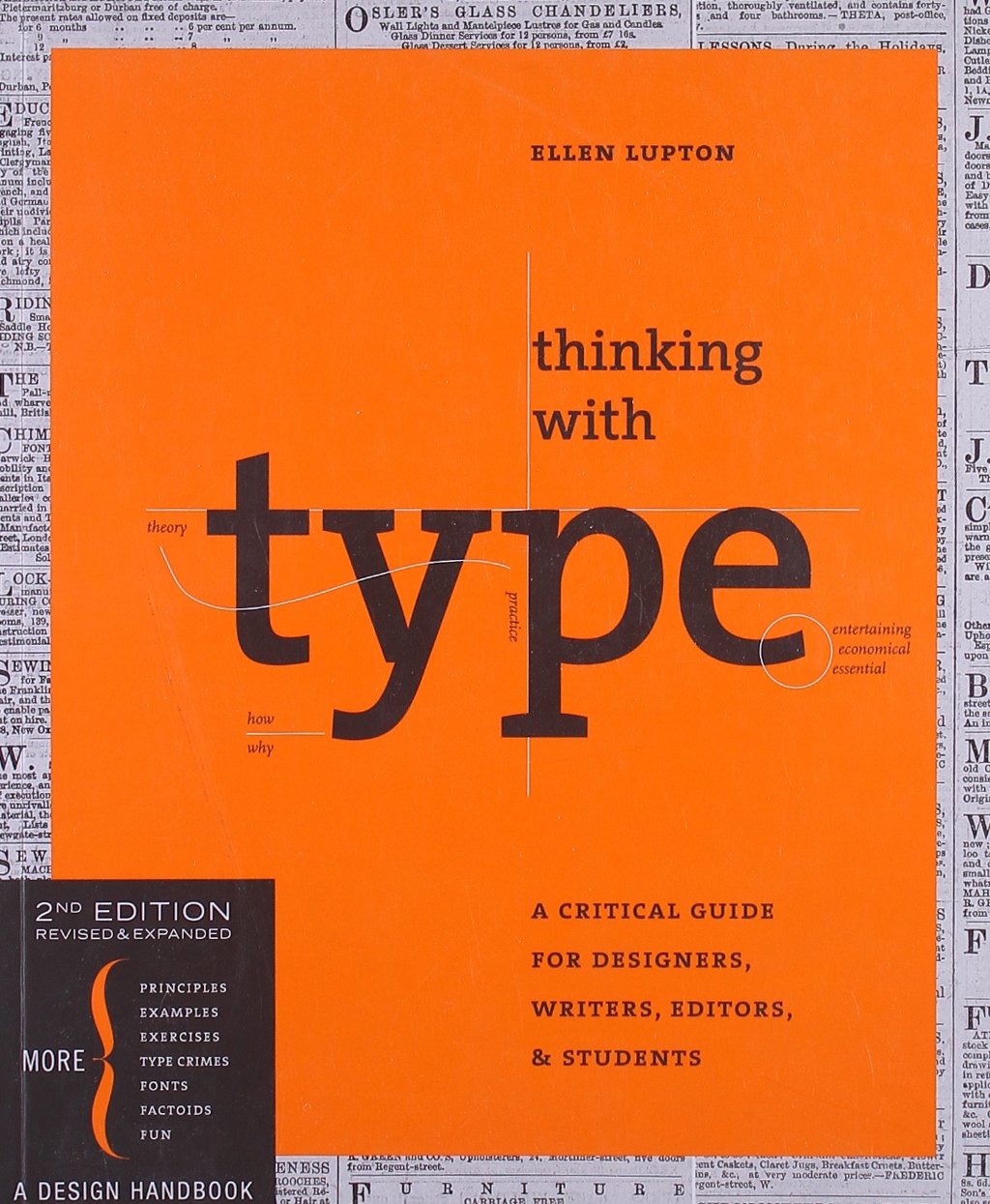
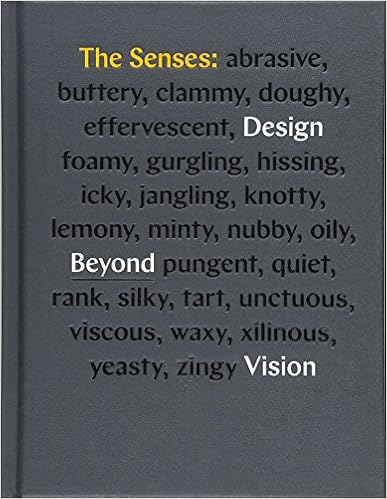

Source: elupton.com
I particularly liked these covers as they were design-based. Thinking with type clearly expresses what is inside the book with its theme based around type design and function. The Senses: Design Beyond Vision loos to be a very tactile book which fits with the theme of the book. This book is conceptual as the words on the cover evoke feelings, tastes and sounds. The third book appeals to me as it is a clear and simple cover which is conceptual in nature that portrays its message in the simplest form which fits with the Bauhaus movement.
Peter Mendelsund
Peter Mendelsund has worked as a dishwasher, a bookseller, a butler, a classical pianist, chicken farmer, teacher, cover designer, house painter, commercial composer, branding consultant, & writer. He is the author of four books: What We See When We Read, (“Welcome and fascinating”—Tim Parks, The New York Review of Books) Cover (“Cover pushes us to reconsider what we think we know about the graphic representation of words and ideas.”—The New Republic) The Look of the Book, a forthcoming non-fiction work (Crown/TenSpeed, Fall ’19)—as well as Same Same, a novel (Vintage/Anchor, Winter ’18). He is the former Associate Art Director of Alfred A. Knopf and is currently heading-up a redesign of The Atlantic magazine while completing his second novel: The Delivery. Mendelsund has been described by the New York Times as “one of the top designers at work today,” and his design work has been described by The Wall Street Journal as “the most instantly recognizable and iconic in contemporary fiction.”


These 3 of Mendeslsund’s cover designs jumped out to me in particular. 2 used repeating patterns, one of which looks like cutout paper giving it a 3D feel, and the other is part of a series that all share the repeated pattern theme which helps identify them as part of the same series. The middle one is very clever and ironic. It plays with the typographical hierarchy and yet you still accurately read the title.
Source: petermendelsund.com
Paul Rand
Born Peretz Rosenbaum in 1914 and died in 1996, Paul Rand is a graphic design legend. Throughout his 60-years long career, he changed America’s opinion on visual communication. With his editorial designs, advertisements, and visual identity works, Rand brought avant-garde European ideas to the United-States, mixing visual arts and commercial design. His colourful combinations, the approach of typography and use of media translate his desire to “defamiliarize the ordinary“. His style consequently still have an impact on graphic design today.
Source: grapheine.com


I knew Paul Rand as a logo designer but not as a book designer. These book covers I have chosen stood out to me for various reasons. The first I liked the overprinting and the geometric pattern made me think of M.C. Escher’s work. The second is made to look like overprint and has an air of mystery about it which lends itself to the novel. The third I picked as I thought that it could be interpreted differently by whoever was looking at it. I interpreted it as the blue and red representing heaven and hell and we were the thin line in between. However, I could be wrong…!
Source: paulrand.design
Paula Scher
Paula Scher is one of the most influential graphic designers in the world. Described as the “master conjurer of the instantly familiar,” Scher straddles the line between pop culture and fine art in her work. Iconic, smart, and accessible, her images have entered into the American vernacular. Scher has been a partner in the New York office of Pentagram since 1991. She began her career as an art director in the 1970s and early 80s when her eclectic approach to typography became highly influential. In the mid-1990s her landmark identity for The Public Theater fused high and low into a wholly new symbology for cultural institutions, and her recent architectural collaborations have re-imagined the urban landscape as a dynamic environment of dimensional graphic design. Her graphic identities for Citibank and Tiffany & Co. have become case studies for the contemporary regeneration of American brands.


Source: Pentagram
Paula Scher’s book covers for her own publications are mainly typographic in nature and vary from a monogram of her initials, to the typographic maps she painted where the cover folds out to a 3′ by 2′ poster portion of her map World Trade, To the oversized letters of her name playing on the designers’ joke about clients wanting to “make it bigger!”.
Jan Tschichold
Jan Tschichold was a prominent twentieth-century German typographer and book designer. He was a remarkable teacher and an author as well. He is best known for writing Die Neue Typographie and Typographische Gestaltung which became standard textbooks for the next generation of typographers. During his stay in England in the late 1940s, he was requested by Penguin Books to redesign their paperbacks, thus he supervised the redesign of 500 books. Furthermore, Jan Tschichold wrote a guideline based on typographic and composition instructions for editors and compositors at Penguin, the Penguin Composition Rules.
Source: Famous Graphic Designers


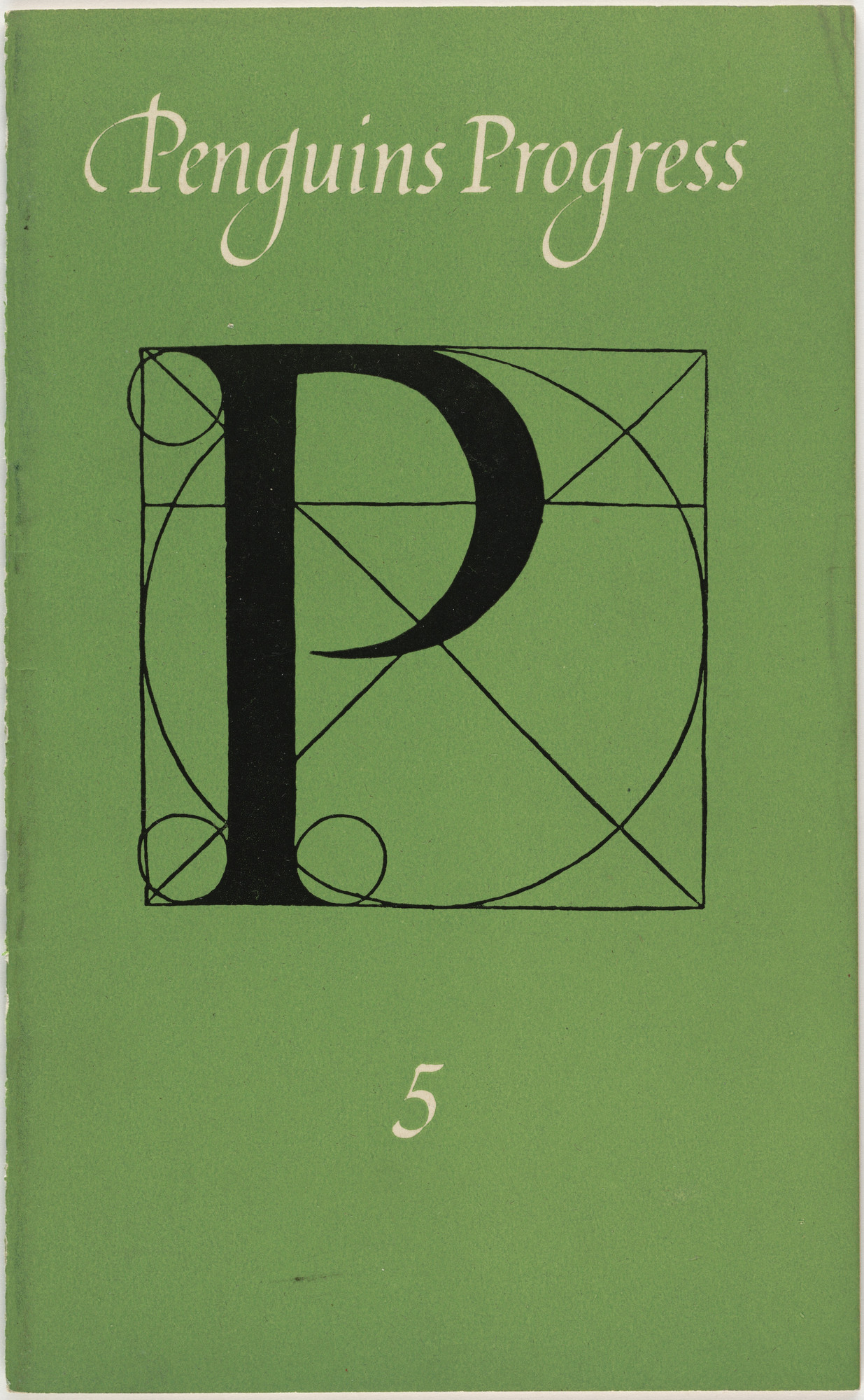
These covers are all minimalist which give the bare minimum of information needed in the most straight forward way. The Penguin covers are a staple of anyone’s collection and were refined by Tschichold in the 1950s. The other 2 are typographic with the Penguins Progress showing the design of the letterform and Die Neue Typographie showing all that’s necessary on the cover.
Wolfgang Weingart
Weingart was born near the Swiss border of Germany, in the Salem Valley, in 1941. He enrolled in a two-year course in applied art and design at the Merz Academy in Stuttgart in 1958. There he discovered the school printing facilities and, at the age of 17, set metal type for the first time. After graduating, he undertook a rigorous apprenticeship as a typesetter at Ruwe Printing in Stuttgart.
Wolfgang Weingart is an internationally recognized figure for his iconic body of work in the field of graphic designing and typography. His work is characterized as Swiss Typography. Moreover, he is deemed the pioneer of ‘New Wave’ or Swiss Punk typography.
Source: AIGA
Source: Famous Graphic Designers

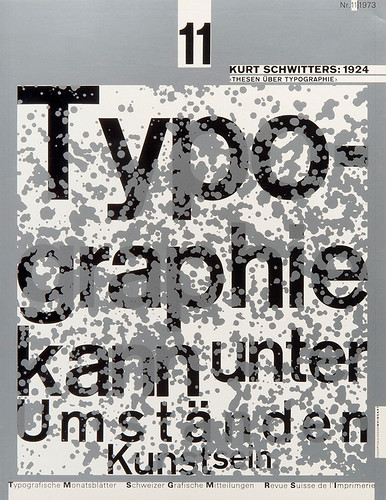

I hadn’t heard of this guy before, but as soon as I saw his work I was immediately hooked. He was one of the pioneers of experimental typography and this shows in the above covers. There are typographically led and aim to break the rules and the grids of traditional typography. They use type to add interest and as a design element rather than just to convey information.
Part 2
The first 2 covers I have compared are Designing Books by Jost Hochuli and The Great Gatsby by Jan Tschichold.

I started off by trying to figure out the grid used on the covers of which some elements were very similar, Both books had vertical type elements down either side of the cover; both had the titles aligned to the centre; both had non-typographical elements on the cover to help divide it up; there is a clear use of hierarchy on both covers with the title being the most important piece of type; both use a single font to give a coherent feel. The Penguin book does have a lot more elements on the cover and the publisher is a lot more prominent in the design. The spacing of the elements on both covers has been given a lot of thought to where they should be placed and aligned carefully to the underlying grid. The image of the penguin is the only imagery used on these books as both are fairly minimal and give just the necessary information to the reader. The Penguin book is visually more attractive as this is aimed at a wider audience than the other which is quite a niche reference book. However, saying that, I prefer the Jost Hochuli cover because of its Swiis utilitarian simplicity and minimalism.
Next, I picked Wolfgang Weingart and Ellen Lupton.

Both of these covers appeal to me. The Bauhaus simplicity with specific rules to be followed of Ellen Lupton’s book and, what appears to be, the chaos of Weingart’s. The Bauhaus shapes of Lupton’s book dictate the placement of the other elements on the page which gives it a very pleasing and ordered look. The title and the sub-heading take second-stage to the imagery in this case with the authors coming last. I did have some trouble trying to work out what the authors’ names were lined up with, but found it eventually. The chaotic cover of the other book leads you to believe that there is no reason for the placement of the typographic elements. It is only when you add a grid to the work that it makes more sense. Having gone back to my sketch of the grid on this one did I begin to wonder if there was some sort of golden ratio/Fibonacci spiral going on which adds weight to the placement of the type. Some non-typographical elements help to balance the design and lead the reader’s eye to where the designer wants it to go. There is some very strong typographical hierarchy here which doesn’t pull any punches about what order you are supposed to read the type. As I said earlier, I like both of these covers but I am drawn to the Weingart cover as I find this more intriguing and interesting to look at.
The final 2 covers I have chosen are by Linda Huang and Paul Rand.

I chose to compare these covers because at first glance they are a million miles apart in their design. However, both covers are divided straight down the middle, both vertically and horizontally. Both designs maintain the proportions set out by the grid which gives them both a cohesive look. Linda Huang’s title font maintains its weight in proportion to its size and even though they differ in size and weight they all align with each other. The cover has some texture within its colour by being bespeckled with white and orange representing the dust of the title. This gives it an expressive feel. Paul Rand’s cover has a very strict grid which is set out by the geometric pattern in the image. Each of the 4 segments created by the centre lines is divided into equal thirds with the type aligning to them. Rand brakes up the page using blocks of colour and overprinting, adding to its geometric look. I think of these 2 books I prefer the Paul Rand design because of the geometry used which, as I have said earlier, reminds me of Escher’s work.
Part 3
Derek Birdsall
I was particularly drawn to Derek Birdsall’s work predominantly by the covers he designed for the Penguin Books Education Series in 1971.
I really liked the clever use of typography and the no holds barred, in your face approach to these books. They are very thought-provoking and can be controversial. These covers are conceptual in nature as they have an underlying message within them.
As well as these books he has had a very varied design career. He designed the first Pirelli calendar in 1964 that set the bar for every calendar to follow. He has designed for Monty Python right through to the Church of England.
Looking at his work overtime, it seems to have matured and become a lot less in-your-face and a little more mainstream.
Source: Graphic Journey
Suzanne Dean
The designer has worked at Vintage (part of Penguin Random House Group) for almost 20 years and has created covers for iconic titles and bestsellers from The Handmaid’s Tale to the Curious Incident of the Dog in the Night-Time. She has also created visual identities for Vintage series – including collections by Jane Austen, Haruki Murakami and Virginia Woolf
As previously stated, I was drawn to Suzanne Dean’s work with the use of bold colours, type and imagery to give the reader an instant idea of what was inside.
Her Bond covers do this particularly well giving them an air of mystery, even though you know that they are about Ian Flemming’s most famous creation. Even though they are all different in their use of type and imagery, you can still tell that they are all part of a series. These covers are conceptual in nature as they give you an insight into some of the stories’ elements, but they also have that nostalgic feel to the covers which also makes them expressive.
Her cover for Margaret Atwood’s The Handmaid’s Tale is a favourite of mine due to its pared-back simplicity. It gives an impression of the bleakness of the tale compared with the stark contrast of the bright red uniforms worn by the handmaidens which come to symbolise the resistance against the state. This is a very expressive cover design.
Source: Creative Review
Wolfgang Weingart
Wolfgang Weingart is recognized for his typographic explorations and teaching at the Schule für Gestaltung Basel, and who, through the work of his students, created a more experimental and expressive approach to typography that was influential around the world and was awarded the 2013 AIGA Medal for his body of work.
I was really drawn to this particular piece of Weingart’s work because it stood out as a piece of design that to the unfamiliar eye doesn’t look ‘designed’. This is definitely a conceptual book cover as it is very direct and tells you exactly what is inside.
This is the cover of his book covering his life’s work first published in 1999. I feel that the cover of this book again is conceptual but is aimed at a more mainstream market and isn’t as experimental as his earlier work. There are still elements of the Swiss-style minimalism in the way that the bare minimum of the title is shown without it becoming unreadable and the grid structure is very clear.
Source: AIGA
Part 4
Tom Lenartowicz
Tom is a graphic designer based in Oslo, Norway. He graduated from Falmouth College in 2009 before moving to Norway.
I’m not sure if these designs are real or just an exercise, but I really like them in their simplicity and cleverness. They all use typography very cleverly to illustrate the stories within. I particularly like the first 2 and think that the use of type to depict the title and story are used brilliantly.


Adronauts
Adronauts is a creative collective founded 2013 in Vienna. Patrick Pichler and Wolfgang Warzilek working together in the creative fields of Advertising, Graphic Design, Illustration and Branding.
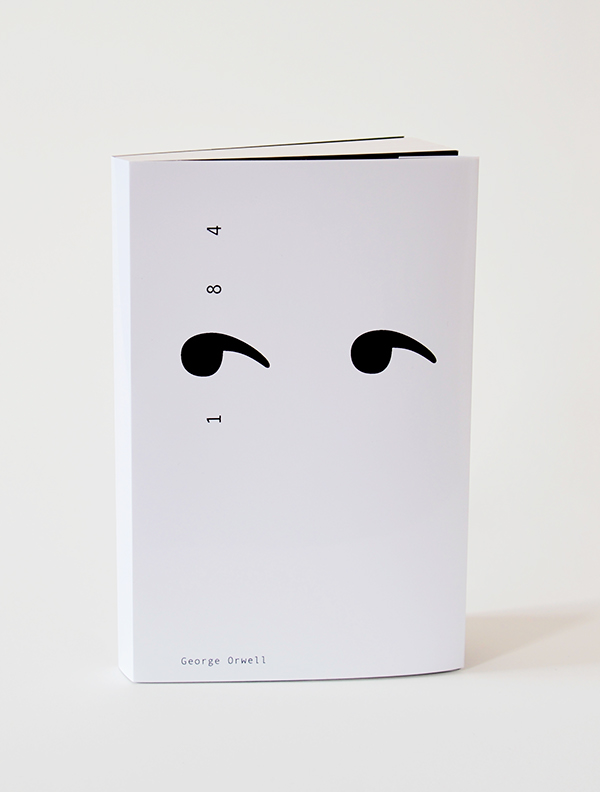
This again is a simple yet clever use of typography to depict the cover of this classic Orwell novel using the nine from the title and repeating it to give the impression of prying eyes watching you.
Another cover by these guys for a novel entitled Kidnapped again uses clever typography depicting one of the letters missing, presumably kidnapped.

Sara Comer
Sara comer is a designer and illustrator based in New York.
I like the way that the designer has cleverly used typography to illustrate the book’s title. It reminds me of the Suzanne Dean cover for the Handmaid’s Tale but this one is more typographic in nature. This cover is a conceptual cover as it alludes to the main character in the book.

Paul J Bartlett
Paul J Bartlett is a freelance art director, designer, and illustrator based in Madison and Milwaukee.
This is a very clever cover combining 4 photographs of the main characters to form one single image for the cover with an overlaid colour to tie them all together. This time the typography is not the main element and is fairly minimal, but works very well with the imagery.

Mark Robinson
Mark Robinson is an interesting chap. He classes himself as a designer; art director; filmmaker; and musician. I couldn’t find much information on his design career, just lots on his musical escapades.
This book cover really amused me, both as a designer and as an ex-chef. The idea of food running out and this being depicted on the cover as an empty food carton with the label used to display the type was an unusual and ingenious way of illustrating the book’s subject matter. I really liked the quirkiness of the idea and the execution is spot-on. The image is so convincing, it looks like it is sat on top of the book cover.

Conclusion
This has been a tough one to get into. But once I did and began to research the various book designers I found it very interesting. I hadn’t heard of the majority of the designers and some led me to discover new styles of designing book covers and new art styles. This has given me more of an insight into how books are designed, and how various designers approach the subject differently.
I feel that I am drawn more to typography-based book cover designs and covers that are clever in their approach to the subject matter as these appeal to my creative leanings and my sense of humour. Hopefully, I can use some of this research as inspiration for future projects.













 craig519809.home.blog